Passer au contenu principal

Auteur/autrice : marketing.nvalue

EcoVadis ESG progress

A silver medal is only the beginning

In February this year, Nvalue earned an EcoVadis Silver medal. We’re proud of it, and prouder still of what earning it actually required.

Sustainability commitments are cheap to write and expensive to verify. A pledge lives in a policy document, but a rating asks for proof of fair treatment of workers, of an honest supply chain, of an environmental footprint you can measure rather than estimate. If businesses are going to reduce harm and improve the lives of the people connected to them, someone impartial has to check the work.

The bar is constantly rising

EcoVadis now rates more than 175,000 companies across over 180 countries, making it the largest business sustainability rating network in the world. The scale has made it become a procurement shorthand, and when a company asks a supplier for its EcoVadis score, it isn’t curiosity, it’s risk management, an attempt to avoid onboarding risk it can’t otherwise see. A strong score used to be a differentiator, but increasingly, it’s the price of admission.

The room is also getting harder to enter. With EcoVadis being a percentile-based medal system, a Silver medal isn’t measured against a fixed bar, it’s measured against everyone else in the network, and everyone else is improving too. Between July 2025 and January 2026 alone, the score needed for Silver rose from 68 to 72 out of 100, which is a four-point jump in just six months. Remaining stagnant, in a system like that, amounts to falling behind.

This is part of why we at Nvalue rate EcoVadis so highly. Its credibility comes from the fact that it refuses to let companies stand still, rewarding continuous, demonstrable improvement rather than a single good year. Simply holding on to a Silver medal means carrying on getting better just to keep pace, and reaching Gold asks for more again; improving faster than your peers, finding more innovative ways to cut emissions and look after the people connected to you, or investing more decisively in your sustainability transition.

The data backs this up in an unglamorous but telling way. EcoVadis’s own 2026 index found that companies new to the network score an average of 51.5, while companies with ten or more years of engagement average 63.2. Sustainability performance compounds over time, and it rewards the companies that treat it as an ongoing discipline rather than a form filled out before a tender deadline.
The turbulent sustainability environment

The GHG Protocol, the accounting rulebook that almost every other climate framework leans on, is going through its biggest overhaul in more than a decade. Its scope 2 guidance is under active revision, with a second public consultation expected later in 2026 and a final standard due in 2027. Its scope 3 standard is tightening too, and an early-2026 progress update proposed that companies cover at least 95% of required scope 3 emissions, pushing companies away from generic spend-based estimates and toward real supplier data. The definition of “good enough” carbon accounting is moving upward.

The Science Based Targets initiative followed close behind. Its Corporate Net-Zero Standard, version 2.0, published in June 2026, is its most significant revision since the standard launched in 2021, and more than 11,000 companies already hold validated targets under the previous version. Scope 1 and scope 2 now have to be targeted separately rather than bundled together, scope 2 claims face a higher quality bar, and larger companies will need a formal climate transition plan backed by third-party assurance. The new standard becomes mandatory for new submissions from January 2028, which sounds distant until you account for how long it actually takes to build a clean scope 1, 2 and 3 inventory from scratch.

The CSRD, meanwhile, has moved the opposite way. The EU’s Omnibus reform, in force since March 2026, raised the reporting thresholds so sharply that somewhere between 80 and 90 percent of companies originally expected to report under CSRD no longer have to. For those companies, it’s tempting to read this as pressure lifting. In practice, it has simply changed shape, because the clients, banks and larger partners who used to expect a CSRD report will still want that information; they’ll simply ask for it directly instead of receiving it through a regulator’s format, and a voluntary standard aimed at smaller companies is already being built to fill that gap.

Together, these three shifts trace a clear line. Carbon accounting is getting stricter, net-zero claims require more evidence behind them, and although fewer companies are legally required to publish any of it, the market keeps expecting to see it.

The gap EcoVadis was built for

EcoVadis was never a regulatory filing. It has always been a market mechanism in which buyers and companies choose, voluntarily, to hold each other to a shared, comparable standard. That is in part, why it becomes more valuable, not less, as mandatory reporting narrows and voluntary expectation widens. Its Environment theme already leans on GHG Protocol-aligned data and its criteria already reward companies with a genuine emissions inventory, published targets, and evidence of follow-through – the same things SBTi 2.0 now expects, and a CSRD report would have contained. Whether or not you’re legally required to report anything at all, an EcoVadis assessment gives you a structured, internationally recognised way to demonstrate exactly where your sustainability performance stands, with the evidence to back it up.

Nvalue’s Silver medal sits inside a network where, by EcoVadis’s own data, the average company still has real gaps to close, because only 26% maintain a full GHG inventory, and under 20% report scope 3 emissions in either direction. But closing gaps like that isn’t just a scoring exercise, it’s the same work that makes a company more resilient to the next regulatory shift, more attractive to the banks and investors now weighing ESG performance into financing decisions, and more trustworthy to the people who work there.


We are here to help

If you’ve been wondering whether an EcoVadis assessment is worth pursuing for your own organisation, or whether you’re still on solid ground given everything moving around CSRD, SBTi and the GHG Protocol this year, that’s a conversation worth having. We’d be glad to have it with you.

Contact us


Lire la suite

Electrification Action Plan and ETS review

Electrification Action Plan and ETS review

The package at a glance

On 17 July 2026, the European Commission proposed a major overhaul of the EU ETS for Phase 5 (2031–2040). The reform aims to balance industrial competitiveness with the EU’s 90% net emissions reduction target by 2040, while supporting electrification and investment in low-carbon technologies.

  • Still a proposal: Parliament and Council negotiation is expected to run into 2027, and details will move
  • Paired with a target to double electrification’s share of final energy demand
  • Framed as the foundation for the EU’s 2040 target of a 90% net emissions cut
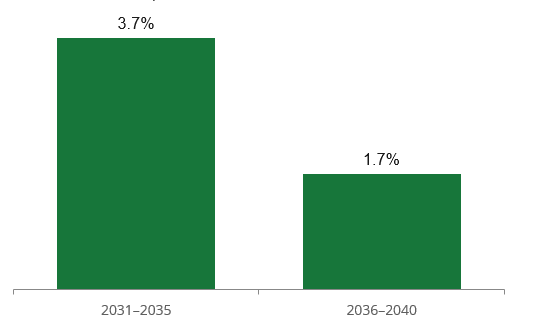
  • 3.7%

    Annual cap reduction factor 2031–2035, down from 4.4%

  • +4 years

    Free allocation extended beyond the current phase-out

  • 12%

    Proposed MSR intake rate (down from 24%)

The cap slows, free allocation persists with new strings attached

Annual cap reduction rate (linear reduction factor)

Compares with a current Fit-for-55 baseline of 4.3% (2024-27) then 4.4% (2028+): a materially more gradual decline that eases near-term scarcity but stretches the path to 2040.

  • Slower cap reduction could ease EUA scarcity after 2030.
  • Free allocation would continue until 2038, four years longer than under Fit-for-55.
  • Companies would need to demonstrate credible decarbonization investments to retain full allocation.
  • Sector benchmarks will continue to determine allocation volumes.

New flexibility mechanisms

  • 1. Carbon removals

    CRCF-certified permanent removals enter the cap via a 250 million allowance increase, ramping to 48 Mt a year by 2040 (an estimated €50bn market). Only BioCCS and DACCS qualify initially, other pathways are excluded for now. Three integration models remain under review: central public purchase, operator-led procurement and surrender, and a one-in-one-out mechanism.
  • 2. Market Stability Reserve

    The MSR is repositioned as a standing strategic reserve rather than a mechanical valve. The automatic invalidation of allowances above the current threshold is being scrapped in favour of retaining them as a stability buffer.

Тhe ETS ecosystem in Phase 5

  • Scope expansion

    Municipal waste incineration is proposed to become a permanent part of the EU ETS from 2028.

  • Industrial Decarbonisation Bank

    A new EU financing mechanism from 2028, directing ETS revenues towards industrial decarbonisation and carbon removals. Its first phase (2028–2031) reserves 400 million EUAs for an Investment Booster paying fixed carbon premia, first-come first-served, with a share reserved for lower-income states.

  • Revenue use

    Channelling is simplified through the Industrial Decarbonisation Fund and the Innovation Fund, with a stated aim of directing industry-linked revenue back to industry.

  • ETS1–ETS2 interaction

    The proposal strengthens coordination between ETS1 and ETS2 to ensure a more coherent carbon pricing framework.

What this means for you

  • 1

    Free allocation isn’t disappearing, conditionality is the new compliance risk to plan around.

  • 2

    Carbon removals are becoming a real compliance lever; early positioning is an advantage, not just a hedge.

  • 3

    The Industrial Decarbonisation Bank and Innovation Fund, create new opportunities to finance electrification, CCS and fuel switching.

  • 4

    If you’re covered by ETS2, watch the ETS1/ETS2 coordination signal closely, it may reshape scope timing.

What should you do next?

Recommended next steps

  • 1

    Map your own free allocation exposure against the proposed conditionality criteria.

  • 2

    Put removals procurement on your 2026–2027 watch list if you’re in a hard-to-abate sector.

  • 3

    Screen planned electrification, CCS, fuel-switching and efficiency projects for potential support through ETS funding mechanisms.

  • 4

    Revisit your plan once Parliament and Council positions emerge.


Questions on how this affects you?

For support and guidance as these proposals develop, we’re here to help you plan!

Contact us


Lire la suite

Inside Nvalue UK: Nathalie’s hands-on internship experience

Eight weeks ago, Nathalie Esau-Buitrago joined Nvalue as an intern supporting our UK team.

Currently studying Business Management at ESCP Business School, Nathalie brought with her a strong interest in international business, sustainability, and market development. During her internship, she had the opportunity to work closely with the UK team, gaining hands-on experience in business development, sales strategy, and the challenges of establishing Nvalue’s presence in a new market.

From the very beginning, Nathalie approached the experience with curiosity, energy, and a willingness to learn. Her time with us quickly became more than an introduction to carbon markets and sustainable market solutions: it was a dynamic, practical, and confidence-building journey.

In this short interview, Nathalie shares what she learned, what challenged her, and what she will take with her from her time at Nvalue.

1. Why did you choose our company for your internship?

As a business student, I chose Nvalue because it brings together two areas I’m interested in: business strategy and sustainability which is central to how companies operate. Most businesses now have to deal with net zero, emissions, and how they hit their climate targets, and carbon markets are one of the main ways they do that. I wanted to understand what actually sits behind those goals, and tools companies use to meet them.

Nvalue also stood out because it was setting up its UK operation. I’m very interested in business development and sales, and how a company establishes itself in a new market, so joining an emerging UK business gave me insight and exposure to that. A small team also meant working hands-on from the start, which is how I learn best, and it meant the work I did made a real difference.

2. What were your expectations before you started?

Honestly, coming in, I expected to spend a lot of time observing and getting up to speed, especially as carbon markets and sustainable market solutions were very new territories to me. I anticipated taking on two big projects, business development and sales strategy, though I wasn’t exactly sure what that would involve. I thought I’d mostly be supporting other people’s work at first, rather than leading anything myself.

3. Were your expectations met?

My expectations were definitely exceeded. I was able to pick things up quite quickly, largely because I was constantly in the working environment – I had the opportunity to have many conversations, not just with my colleagues but with people I was introduced to/met at conferences, in the coworking space, and elsewhere, who all taught me a lot. My colleagues were also super open and happy to answer my endless questions, which made a huge difference to how fast I learned. On top of that, I was given a lot of independence in my own work. Of course, I was given plenty support and guidance when needed, but it was ultimately up to me to create and lead my own projects, which I really enjoyed.

4. How would you describe your internship experience?

I had an extremely positive experience with Nvalue and couldn’t have asked for a better internship. My manager Lisa and colleague Jack were an amazing team who offered a lot of support and guidance and really encouraged me in my work.

The experience was very dynamic, which is something I really enjoy and look for in a working environment. I was given the opportunity to travel a lot, going to conferences, even on my own, to represent Nvalue and meet new people in the industry. I was also given a lot of independence and trust in my own work where I led two of my own projects in Nvalue’s UK business development and commercial strategy, which I then presented to the directors of the company. That really pushed me outside my comfort zone and helped me grow in confidence.

I also saw first-hand how much work goes into establishing a company in a new market, which I found genuinely interesting and insightful. I found it a very valuable lesson, especially if I ever look to start my own business one day.

5. Did you have the opportunity to apply what you learned during your studies?

Yes, definitely. One thing I spoke about a lot with my colleagues was the importance of intercultural skills in an international workplace like this, which I learnt from one of my modules. In a company that works across different countries, it’s really important to understand and acknowledge other people’s cultures rather than seeing everything through your own cultural lens and that came up constantly in how I worked and communicated with people.

I was also able to apply a lot of my marketing studies to the sales and commercial strategy side of my projects, from thinking about positioning and messaging through to how you approach a new market. Additionally, I was able to directly transfer the skills I picked up from group and research projects at university into the work I did for Nvalue – research, analysing information, and pulling it together into something coherent and usable.

6. What did you enjoy the most during your internship?

What I enjoyed most was how dynamic it was. The travelling, conferences, and constantly meeting new people meant there was always something to learn. I learnt so much not just from my own conversations but also from listening to and observing my colleagues in theirs. Seeing how they built relationships, handled discussions, and turned a conversation into an opportunity was incredibly interesting and informative.

7. Was there any task you found particularly challenging?

Starting my projects from scratch was a little challenging. As I mentioned, this was a completely new area for me, so at first, I felt a little overwhelmed about where to begin but with my colleagues’ guidance, I broke it down into smaller steps, and once I had a clearer structure my confidence grew.

8. What will stay with you from this experience?

I think what will stay with me most is the confidence I’ve gained; I came in knowing close to nothing about carbon markets and sustainable market solutions and left having led and presented my own projects, which is something I’m quite proud of.

9. How did you find working with the team?

I really enjoyed working with the UK team. Both Lisa and Jack are incredibly intelligent and knowledgeable, and they both taught me so much. They were always very willing to offer me guidance and support whenever I needed it and really integrated me into the team. Most importantly, they actually gave me real tasks to do. I think a lot of interns  end up overlooked during their internships, so being trusted with real responsibility made a big difference and made the whole experience so much more rewarding. Although I didn’t spend a lot of time with the rest of the Nvalue team, they were also really welcoming and always willing to offer me their time and knowledge.

10. What are your plans for the future?

Although I’m not entirely sure just yet, this internship has introduced me to an industry I’m really interested in exploring further as it feels like a good fit for me. I’d like to build on what I’ve learned here whether that’s in carbon markets specifically or more broadly in the business development and sustainability space.

11. If you had to describe this experience in three words, what would they be?

Dynamic, challenging and hands-on.


We would like to thank Nathalie for her contribution, curiosity, and positive energy throughout these eight weeks, and we wish her all the very best for the next steps in her university and professional journey.


Lire la suite

Tennis Europe Summer Cup Girls 14 & Under 2026 Loano 02

Nvalue is proud to sponsor the 2026 Tennis Europe Summer Cup Girls 14 & Under in Loano

Nvalue is pleased to support the 2026 Tennis Europe Summer Cup Girls 14 & Under, taking place in Loano from 29 June to 1 July 2026, with the opening ceremony scheduled for 28 June.

The tournament will take place in Loano, at the tennis facilities managed by ASD Tennis e Sport Educativo Alberto Zizzini, bringing together some of the most promising young female tennis players in Europe. The final stage will see the best national teams from the qualifying rounds compete for the European title and for access to the World Junior Tennis Competition.

The European Summer Cup is one of the key moments in the youth tennis calendar. It is a competition where technical quality, discipline, teamwork and resilience are tested at a formative stage in the athletes’ development. For many young players, events like this represent an important step in an international sporting journey.

Loano continues to confirm its role as an important host location for junior tennis. The town, together with the local tennis association, provides a setting where sport, education and community come together, offering young athletes the opportunity to compete in a professional and welcoming environment.

Nvalue has supported this event over the years, because we believe that long-term value is built through responsibility, commitment and trust. These principles are central to our work in environmental markets and sustainability, and they are equally visible in sport: in preparation, respect for rules, fair competition and the ability to look beyond immediate results.

Supporting young athletes means investing in the future. It means encouraging talent, ambition and international exchange, while contributing to an event that brings together players, coaches, families and local communities around a shared passion.

We are proud to stand alongside the organisers of the Tennis Europe Summer Cup Girls 14 & Under and to contribute to an initiative that combines sporting excellence, youth development and the positive energy of an international event hosted in the Ligurian Riviera.

We wish all players, teams and organisers a successful tournament!


Lire la suite

Revision of the benchmark values for free allocation of emission allowances

Revision of the benchmark values for free allocation of emission allowances (2026-2030)

The issue of the reduction in free allocation, resulting from the proposed revision of ETS benchmarks, invites a broader reflection on the role and effectiveness of the European Emissions Trading System in supporting the decarbonization of industry.

Indeed, it is necessary to question the actual function of an ETS in which the price of CO₂ remains consistently below the marginal abatement costs of many of the technologies that are critical for the industrial transition. If the carbon price signal is insufficient to make investments in solutions such as low-emission hydrogen, carbon capture and storage (CCS), or the electrification of high-temperature industrial processes economically viable, the system risks failing to generate the incentives needed for technological transformation. At the same time, the progressive reduction of free allowances increases the residual cost of emissions for companies, even in the absence of mature, scalable, and competitive technological alternatives.

This creates a paradox: on the one hand, the carbon price is still too low to make many of the investments required for deep decarbonization economically attractive; on the other hand, it is already high enough to significantly affect the competitiveness of European industry. Under these conditions, the ETS risks becoming more of a cost driver than an instrument capable of effectively supporting the transition.

Against this backdrop, careful consideration should also be given to proposals aimed at containing the price of CO₂. If the carbon price generated by the market is deemed incompatible with industrial sustainability, it is necessary to question the overall coherence of the emissions reduction trajectory. The carbon price is nothing more than the economic expression of allowance scarcity: systematic interventions designed to limit its increase risk weakening the very signal the system is intended to generate. If the market price is considered excessive relative to the industry’s capacity to adapt, the issue to be addressed is not merely the functioning of the allowance market, but rather the relationship between the pace of cap reduction and the actual availability of the technologies needed to support it.

Yet we need the ETS. We need it to support the transition towards a more sustainable and resilient economy and to gradually, pragmatically, and without ideological excesses, loosen Europe’s dependence on fossil fuel supplies. The real question, therefore, is not whether to preserve the system, but how to make it consistent with industrial and technological realities.

At the same time, Europe must remain both a climate leader and a competitive industrial economy. Achieving climate neutrality will require ambitious policies, but also a strong industrial base capable of investing in and deploying the technologies needed for the transition. Until the technologies required for deep decarbonization become available at scale and at sustainable costs, it is essential to avoid a situation in which the ETS primarily generates cost transfers without creating the conditions necessary for emissions reductions. From this perspective, instruments such as free allocation should not be viewed as a derogation from climate objectives, but rather as a balancing mechanism that helps preserve industrial competitiveness during the transition.

The purpose of free allocation is precisely to mitigate and partially decouple compliance costs from the carbon price signal. The price of CO₂ should continue to provide a credible and progressively stronger indication of the economic value of emissions, guiding long-term investment decisions. However, it is not necessary for this signal to be translated immediately and fully into an economic burden for every installation. Free allowances make it possible to temporarily protect facilities exposed to international competition while first movers test and industrialize new decarbonization technologies. In other words, they allow the system to maintain its strategic direction without immediately imposing on the entire industrial base costs that current technologies do not yet make avoidable.

It is also necessary to acknowledge a frequently overlooked reality: the key breakthrough technologies on which the decarbonization of heavy industry depends—from hydrogen to carbon capture and storage—extend beyond the boundaries of the individual plant. They require dedicated infrastructure, transport networks, storage systems, supply markets, and investments that exceed the capacity of any single company. Their deployment therefore presupposes deep coordination between the public and private sectors, capable of sharing the risks, costs, and timelines of the transition.

This is where the real Gordian knot of industrial decarbonization emerges: if these technologies are too expensive, companies will not deploy them; but if no one deploys them, the economies of scale needed to reduce their costs will never materialize. Breaking this vicious circle requires instruments capable of supporting the market during the initial phase of adoption. In many industrial sectors, the marginal abatement cost of breakthrough technologies still significantly exceeds the price of EU Allowances (EUAs), making it difficult to expect the ETS alone to provide a sufficient investment signal. In this respect, experiences such as the Carbon Contracts for Difference (CCfDs) introduced in Germany offer a particularly promising example. Through long-term contracts, the public sector helps bridge the cost gap between conventional and low-emission technologies that the carbon price alone is not yet capable of rewarding, enabling companies to invest today in solutions that may become competitive tomorrow.

Looking ahead, the gradual integration of Carbon Dioxide Removals (CDRs) into the ETS architecture also deserves careful consideration. As the remaining cap converges toward the irreducible core of hard-to-abate emissions, the risk of economic tensions and regulatory distortions will inevitably increase. If accompanied by stringent criteria regarding quality, additionality, permanence, and verifiability, the integration of CDRs could provide an additional source of flexibility, helping to achieve climate neutrality objectives without placing the entire burden of managing residual emissions on the Linear Reduction Factor and the progressive reduction of available allowances.

The challenge, therefore, is not to weaken the ETS, but to complete it. The carbon price must continue to provide the long-term signal; free allocation must prevent that signal from translating prematurely into a loss of competitiveness; industrial policy instruments must enable emerging technologies to overcome the initial barriers to deployment; and CDRs may, if properly regulated, contribute to the long-term sustainability of the system as emissions reductions enter their most difficult and costly phase.

In light of these considerations, aggressive reductions in free allocation appear premature and unlikely to contribute to maintaining an appropriate balance between carbon pricing and industrial competitiveness. Without such a balance, the risk is not only that decarbonization efforts will slow, but also that industrial activity, employment, and emissions will increasingly be relocated beyond Europe’s borders.


Contact us


Lire la suite

Nvalue new CEO - Valpy Fitzgerald - Blog

Introducing our new CEO, Valpy Fitzgerald

A new chapter for Nvalue:

On 16th March, Valpy Fitzgerald joined Nvalue as our new CEO — a significant milestone in Nvalue’s journey. Valpy brings with him not just a career built across Europe’s energy markets, but a conviction: that the companies shaping the energy transition need partners, not just brokers. 

It’s a belief that fits naturally at Nvalue. Since 2008, this business has been built on the idea that expertise and relationships come before transactions — and that understanding a client’s context matters more than selling a product. With Valpy at the helm, that principle doesn’t change. If anything, it gets sharper. 

Why now, and why this change

Nvalue has evolved from a founder-led Swiss organization into a multi-market business serving clients across Europe, the USA, and beyond. To support this growth and our future ambitions, we recognized the importance of bringing in a CEO with the specific international experience to lead this next phase. 

A key priority under Valpy’s leadership will be to further strengthen the geographic expansion strategy already underway, with a particular focus on the United Kingdom. We see London as one of the leading global carbon hubs, making it a natural fit with our ambition to increase our presence in international carbon markets, especially in the area of carbon removals. By investing in the UK, we aim to enhance our access to global opportunities while deepening our expertise in rapidly evolving sectors such as carbon removals and biomethane. 

Why Valpy 

Valpy joins Nvalue with over a decade of senior leadership experience across electricity, gas, and carbon markets. After attaining a Master’s in Physics in the UK and teaching Sustainability at universities in Italy, he began his career as a gas and power analyst at Enron. He subsequently managed forecasting, hedging, and trading departments at Opus Energy and Drax Group. Before joining Nvalue, he served as Global Director of Sustainable Markets at Elimini, where he worked to establish the global market for Carbon Dioxide Removals. 

It’s a trajectory that moves from technical depth to strategic breadth — exactly the combination Nvalue needs as it enters its next phase of growth. 

But credentials alone don’t explain why Nvalue chose Valpy. Beyond the track record, what convinced us was the fit — with our values, our way of working, and the culture we have built over the years. Valpy understands that the energy transition is not an abstract policy objective, but a daily operational reality for the companies we serve. He shares Nvalue’s conviction that relationships matter more than transactions, and that trust — built slowly and carefully — is the real competitive advantage in this market. 

In his own words:

“We will prioritise relationships over tasks. We will make decisions quickly and reward initiative and accountability. And we will do all of this with equality, respect, and a love of the environment at the centre of everything we do.”

Commitment to continuity 

While this appointment marks an evolution in our management model, our commitment to continuity remains unchanged. The management team that has shaped Nvalue’s expertise and culture remains deeply engaged in the business. 

Alessandro Faccoli, as President of the Board, will work closely alongside Valpy to ensure the continuity of Nvalue’s legacy and to preserve the company’s identity as a reliable, transparent and agile partner. 

Dania Piccioli, as Chief Investment Officer, will partner with Valpy to drive the strategic vision and support the expansion of Nvalue’s commercial and marketing activities. 

Tiziano Tamburini will continue to lead all operational activities, ensuring that the organisational resources and infrastructure keep pace with the company’s growing ambitions. 

Krasimir Koev, as Chief Financial Officer, will continue to provide the financial discipline and rigour that underpin Nvalue’s ability to grow sustainably — the steady hand that gives the business the confidence to move fast. 
The team you work with, the processes you rely on, and the principles that guide our advice remain unchanged. 

A message from the new CEO

“I have long admired Nvalue’s role as a key player in the European renewable energy sector,” says Valpy Fitzgerald.
“I am honoured to lead this talented team as we embark on this next chapter together. In the coming weeks, I look forward to meeting many of our partners and exploring how we can further strengthen our collaboration and achieve our climate goals.”

We are excited to welcome Valpy as we enter this next phase of Nvalue’s journey. 
We look forward to the future with confidence, remaining fully committed to supporting our partners in achieving their decarbonization goals. 


Lire la suite

E-world 2026

What E-world 2026 told us about the energy transition

Five themes from three days in Essen and what they mean for companies navigating decarbonisation, compliance, and market uncertainty in 2026.

Some trade fairs are a barometer. E-world 2026 in Essen was one of them.

With 37,000 industry leaders, 1,136 exhibitors, and delegations from 126 nations, this year’s edition was the largest in the fair’s 25-year history. What stood out, however, was not the scale, but the nature of the conversations taking place across the floor.

The Nvalue team spent three days speaking with energy managers, compliance officers, CFOs, sustainability directors, and brokers from across Europe and beyond. The picture that emerged was complex, fast-moving, and, in places, surprisingly consistent across sectors and geographies.

Here are the themes that defined the fair.

Supply security has become the biomethane conversation

For years, the biomethane discussion centred on availability and certification. At E-world 2026, it shifted decisively towards long-term supply security, with companies seeking multi-year offtake structures, navigating RED III implementation, and responding to the evolving German regulatory landscape.

Decarbonisation instruments have reached the boardroom

Guarantees of Origin, carbon credits, and EACs are no longer a procurement line item. They have become strategic assets discussed at CFO and board level, with growing scrutiny over integrity, greenwashing risks, and procurement timing in a volatile GOs market.

The GHG Protocol revision has created a fault line in the market

The proposed mandatory hourly matching requirement under the revised GHG Protocol was one of the most debated topics at the fair. The consultation results and their implications for corporate decarbonisation strategies are significant, and Nvalue has a clear position on them.

The EU regulatory landscape is accelerating

ETS 1, ETS 2, and CBAM. The three pillars of the EU’s evolving compliance architecture were a constant backdrop to the conversations in Essen, not as abstract policy developments, but as immediate operational realities.

Geopolitical uncertainty is reshaping the strategic context

A broader theme that ran through many conversations at E-world was a growing sense of geopolitical and economic instability influencing how companies think about energy strategy, supply chain resilience, and decarbonisation commitments, particularly for those with international operations or global supply chains.

The conversation continues

E-world confirmed what we already believed: the energy transition is not a future scenario; it is being negotiated, priced, and decided right now in boardrooms, trading desks, and compliance departments across Europe.

If any of the themes above are relevant to your organisation, we would welcome the opportunity to discuss them in depth. We have published a full overview of the topics discussed at E-world 2026, along with the opportunity to book a direct conversation with the right member of our team.


Read more and book a meeting


Lire la suite

EcoVadis Sustain 2026

From sustainability commitments to operational reality

Reflections from EcoVadis Sustain 2026 on resilience and how companies are turning climate ambition into operational action.

Some of the most important systems in the world are usually invisible. Financial systems, supply chains, and energy networks form the infrastructure that quietly holds the global economy together, yet we rarely think about them until something breaks. At EcoVadis Sustain 2026 in Paris, those otherwise invisible systems were brought firmly into the foreground of the discussion.

The event brought together business leaders, sustainability practitioners, policymakers, procurement officers, and supply chain experts to discuss how companies operate in a world where the systems supporting the global economy and the systems supporting life on Earth are increasingly intertwined, yet are still often addressed in isolation.

Paul Polman, co-author of Net Positive, closed the first day of the conference with a session that captured this tension well. He challenged the audience to reconsider the relationship between economic activity and the natural systems that underpin it, quoting astrophysicist Hubert Reeves.

“Man is the most insane species. He worships an invisible God and destroys a visible Nature. Unaware that this Nature he’s destroying is this God he’s worshipping.”

The remark lingered because it captured a deeper contradiction at the centre of the sustainability discussion. Human societies, economies, and supply chains depend entirely on functioning natural systems, yet those systems are still frequently treated as something separate from the decisions that shape how we produce, consume, invest, and govern.

A changing sustainability conversation

Across the discussions in Paris it also became clear that the conversation itself has evolved. For most organisations represented at Sustain, the debate is no longer about whether responsible business matters. That question, for the most part, has already been settled.

Instead, the focus has shifted to how companies translate ambition into operational reality.

Over the past decade, many of the world’s most successful organisations, including Microsoft, Google, Unilever, Ørsted, and Schneider Electric, have invested heavily in understanding and managing their environmental and social impacts. Targets have been established through frameworks such as the Science Based Targets initiative, governance structures and policies have been strengthened, and transparency has improved significantly.

These developments represent important foundations. But what increasingly separates these organisations from many others is the extent to which sustainability has been embedded at the core of their operations.

It is no longer treated as a side initiative or a set of distant targets. Instead, it shapes how departments operate, how decisions are made, and how organisations move from ambition to concrete action.

Resilience as a business imperative

At Sustain 2026, it became clear that most companies in attendance have already established the essential foundations. The next phase, however, is about going further by embedding sustainability within the operational mechanics of business.

One word surfaced repeatedly throughout the discussions: resilience.

Often used alongside sustainability, resilience reflects a growing recognition that environmental responsibility and long-term business stability are increasingly interconnected. Climate risks, energy market volatility, geopolitical tensions, and supply chain disruptions have demonstrated that sustainability is not only an environmental consideration, but also a structural one.

Companies are beginning to understand that building more sustainable systems often means building more resilient ones as well.

Ecovadis 2026

Energy systems at the centre of the transition

Energy systems provide a particularly clear example of this connection. For many organisations, securing reliable and lower-carbon energy is no longer viewed solely as a climate objective. It is increasingly recognised as an important part of maintaining operational stability and reducing exposure to market and geopolitical volatility.

As companies begin translating high-level commitments into practical implementation, specialised partners often play a supporting role in this process.

Approaches such as renewable energy procurement, the use of energy attribute certificates, participation in carbon markets, and broader decarbonisation advisory services are becoming practical mechanisms that help organisations navigate the transition while strengthening both their sustainability performance and their operational resilience.

An ecosystem of solutions

Equally important is the community that has developed around these challenges.

Events such as Sustain, and platforms such as the newly released EcoVadis Community, create spaces where organisations facing similar complexities can exchange practical experience and compare approaches in order to refine strategies.

No single company, tool, or framework can address these challenges alone. Progress typically emerges through the interaction of multiple actors across value chains, each contributing a different part of the solution — something that became even more apparent throughout the discussions at Sustain.

Continuous improvement in practice

For Nvalue, the event also coincided with an encouraging milestone. Shortly before the event, we were awarded a Silver Medal by EcoVadis, placing us within the top 15% of all companies assessed globally over the past twelve months.

The recognition reflects the strength of our sustainability management approach and the work undertaken across the organisation to integrate environmental, social, and governance considerations into our operations.

Like any meaningful benchmark, however, the value lies not in the medal itself but in the improvement it encourages. Strengthening policies, refining processes, and deepening transparency remain part of an ongoing journey.

The systems that underpin both our economies and our environment are constantly evolving. Navigating this transition requires collaboration, practical expertise, and credible market solutions.


At Nvalue, we work alongside organisations as one part of this broader ecosystem, helping bring sustainability commitments to life through practical decarbonisation action.

If you would like to explore how these approaches could support your organisation, feel free to get in touch using the form below.

Contact us


Lire la suite

The Grand Strategy of Decarbonisation

Votre chaîne d’approvisionnement est-elle prête à affronter le coût du carbone?

Un défi silencieux est encore largement sous-estimé par de nombreux dirigeants industriels : l’impact financier direct des émissions de Scope 3 sur la compétitivité mondiale.

À l’approche de l’événement, posez-vous la question: de combien vos coûts d’exploitation vont-ils augmenter lorsque le CBAM et l’ETS2 seront pleinement mis en œuvre ?

La “Grande Stratégie” de la décarbonation et de la résilience de la chaîne d’approvisionnement : la valeur du Scope 3 que vous ne voyez pas encore

Imaginez un fabricant européen suivant un schéma familier : des matières premières ou produits semi-finis sont importés d’un autre continent, transformés dans une usine européenne, puis livrés aux clients par camion.

Le transport maritime et la production sont déjà couverts par l’ETS.
À partir de 2028, la logistique aval sera également soumise à l’ETS2.
En parallèle, les produits importés sont soumis au CBAM, ce qui fait grimper les coûts de 30 à 40 % en quelques années — alors que les pays exportateurs déploient leurs propres mécanismes de tarification du carbone.

Sous la pression croissante des mécanismes carbone européens et mondiaux, ce modèle peut-il encore tenir ? Et comment devra-t-il évoluer ?

Le Scope 3: du fardeau déclaratif au radar stratégique

Dans la course à la transition écologique, le Scope 3 — les émissions sur l’ensemble de la chaîne de valeur — est souvent perçu comme un exercice déclaratif complexe et optionnel.
C’est une erreur.

C’est là que se trouvent les signaux réels : le Scope 3 agit comme une lentille stratégique, révélant comment les politiques climatiques mondiales impacteront les chaînes d’approvisionnement et les coûts — souvent avant que ces effets ne se reflètent dans les comptes financiers.

Avec les Scopes 1 et 2, c’est un outil indispensable pour anticiper les prochaines zones de pression des prix carbone.

Un parcours pluriannuel : de la vue d’ensemble à l’action ciblée

Gérer le Scope 3, ce n’est pas cocher une case.
C’est un parcours stratégique sur plusieurs années, qui gagne en précision avec le temps :

  • Hotspot analysis: démarrer rapidement avec des modèles simplifiés pour cibler les catégories critiques et les fournisseurs à fort impact.
  • Engagement: transformer les analyses en actions en impliquant les fournisseurs dans l’effort de décarbonation.
  • Affinement: remplacer les moyennes sectorielles par des données primaires de qualité, élargir la couverture à des catégories secondaires, et construire des modèles de plus en plus robustes et exploitables.

Un radar pour la réglementation européenne – et la prochaine vague mondiale

La véritable valeur du Scope 3 réside dans sa capacité d’anticipation :

  • Le CBAM redéfinit déjà l’économie des importations à forte intensité carbone.
  • L’ETS2 (dès 2028) ira plus loin: il augmentera les coûts logistiques et de production en intégrant les émissions de Scope 1 des fournisseurs — qui entrent pleinement dans votre Scope 3.
  • De nouveaux systèmes carbone arrivent rapidement : l’Europe a montré la voie, mais ne restera pas seule. Des marchés du carbone et des taxes sur les émissions émergent dans des juridictions clés — de la Chine et de la Turquie à plusieurs États américains.
    L’analyse Scope 3 permet de tracer l’origine des biens achetés et de modéliser l’impact de ces nouvelles tarifications sur les coûts logistiques et de production.

Une intelligence au service de la compétitivité

Gérer le Scope 3, c’est construire une intelligence stratégique, pas seulement être en conformité.
C’est comprendre comment la géographie de la création de valeur va évoluer sous l’effet de la hausse des prix du CO₂, et où les coûts et les risques vont se concentrer demain.

Les entreprises qui identifient aujourd’hui leurs zones critiques Scope 3 et affinent leurs données année après année construisent un avantage défensif et offensif.
Dans l’économie mondiale de demain, le prix du carbone comptera autant que le coût du travail ou des matières premières.

À son stade le plus avancé, cette démarche se traduit par une évaluation complète du Scope 3 — un véritable cap stratégique de décarbonation.
Elle fournit des indicateurs vérifiables, alimente directement le reporting extra-financier (dont la CSRD) et permet aux entreprises de communiquer une valeur résiliente et crédible, fondée sur des données concrètes, et non sur des hypothèses.


Stress-test de votre chaîne d’approvisionnement à Essen

La théorie de la durabilité s’arrête là où commencent les coûts.
Dans un monde contraint par le carbone, la résilience de votre entreprise dépend de la qualité de vos données Scope 3.

Ce que nous pouvons faire ensemble:

  1. Consultation directe : échangez avec nos experts sur vos modèles d’importation et de logistique.
  2. Stress-test express : découvrez comment les nouveaux mécanismes de tarification du carbone affecteront vos marges.
  3. CSRD & stratégie : apprenez à transformer la conformité en atout stratégique pour communiquer une valeur crédible et résiliente au marché.

Le coût du carbone remonte la chaîne d’approvisionnement. Si celle-ci n’est pas prête face au carbone, vos marges sont déjà exposées.

Assurez-vous qu’elle ne devienne pas votre maillon faible.

Contactez-nous


Lire la suite

Scope 2: why now is the right time to act

For many industrial companies, reducing Scope 2 CO₂ emissions – i.e. indirect emissions associated with purchased electricity – has long been approached with caution. Decisions have often been postponed, pending greater regulatory clarity or more favourable market conditions.
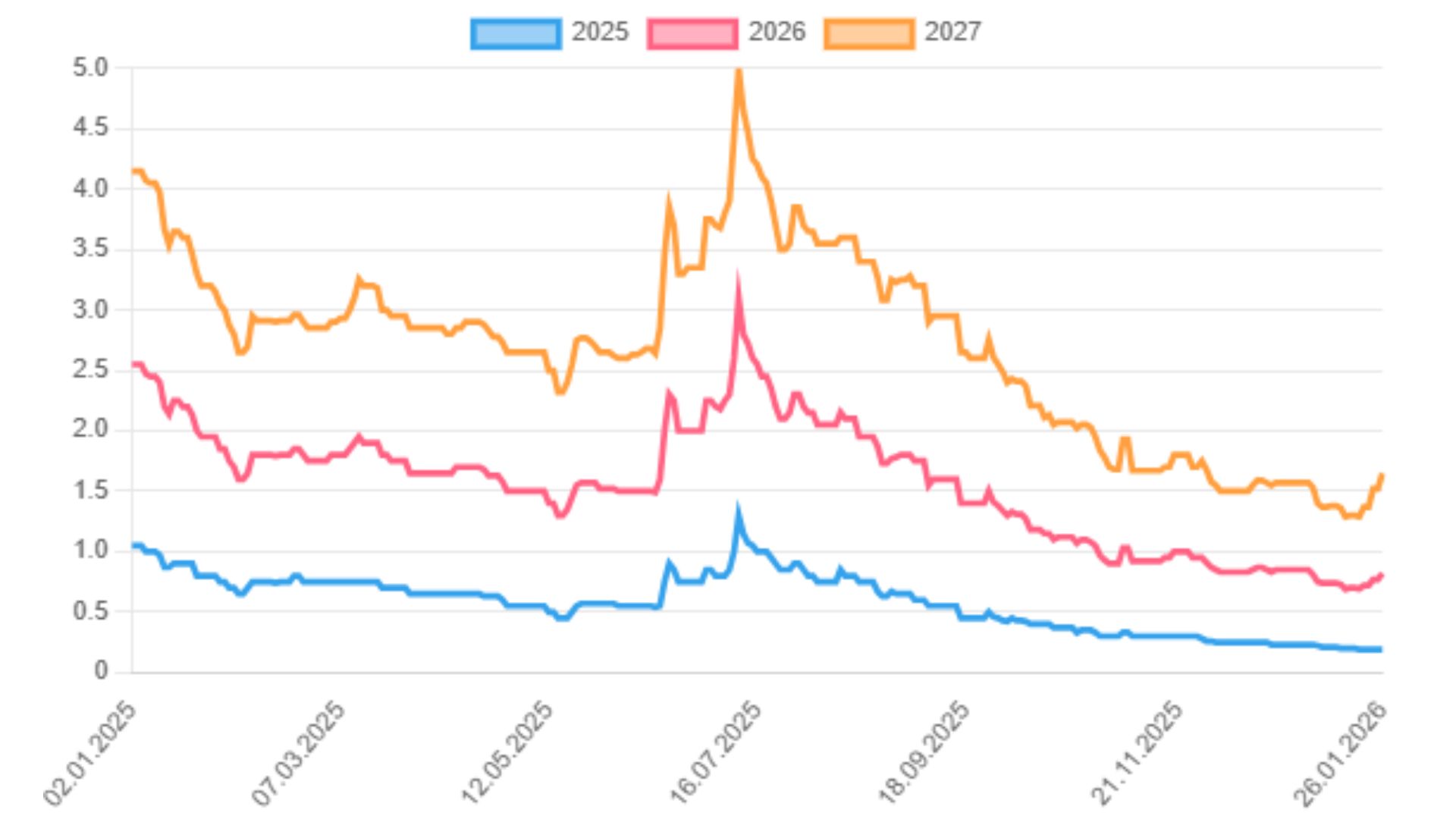
Today, the context has changed. Prices for Guarantees of Origin (GOs) – one of the key instruments for market-based Scope 2 coverage – have returned to levels among the lowest seen over the past five years.

Five-year market price evolution of HWS GOs – production periods 2025–2026–2027

Figure 1: Five-year market price evolution of HWS GOs – production periods 2025–2026–2027

Source: market observation data from Nvalue

Some short-term market dynamics do not reflect a structural shift in price conditions, but are instead attributable to contingent factors.
In particular, tighter hydrological conditions in the Nordic countries and across the Alpine region have reduced visibility regarding future production. In this context, some producers who had already sold part of their output forward have been constrained by internal risk-management policies, temporarily reducing the volumes offered to the market.

In light of these dynamics, as is often the case in energy and environmental markets, certainty about the future remains limited. What can be done today, however, is to gain control over costs and to turn a future risk into a strategic decision.

Market context and current price levels

Current price levels reflect a market positioned with a high degree of caution. The Guarantees of Origin market has already priced in a range of bearish factors, compressing expectations and keeping prices at relatively low levels.

Among the main elements already reflected in the market are:

  • the potential availability of residual volumes from the previous year (GO rollover);
  • the commissioning of new renewable capacity;
  • an uncertain geopolitical environment, marked by international tensions and regulatory instability;
  • a downward revision of expectations for green hydrogen, with many projects postponed or cancelled;
  • the entry of new net-exporting countries into the AIB system, such as Bulgaria.

Taken together, these factors have contributed to keeping prices compressed. However, this configuration primarily reflects the recent past and does not necessarily capture the dynamics that may emerge in the coming years.

Growth of renewable electricity generation in Europe

Eurostat data and leading sector reports indicate that in 2025 the share of electricity generated from renewable sources in Europe increased further compared to 2024. However, this growth has not been uniform across technologies.

In particular, the increase has been driven by solar generation, while the relative share of wind and hydropower has declined. This is a relevant aspect, as wind and hydropower have historically accounted for a significant share of GO issuance.

Source20242025 (Q3)Trend
Solar22-23%~38%Strong growth driven by new installations and favourable seasonality
Wind39%~31%Decline in relative share, offset by solar expansion
Hydropower29-30%~23%Impact of hydrological variability
Bioenergy + Geothermal~8%~8%Stable contribution

Overall, the share of renewables in total European electricity generation increased from 47.5% in 2024 to 49.3% in 2025. However, the reduced contribution of hydropower and wind suggests that 2025 may result in lower GO issuance compared to the previous year, despite the overall increase in renewable generation.

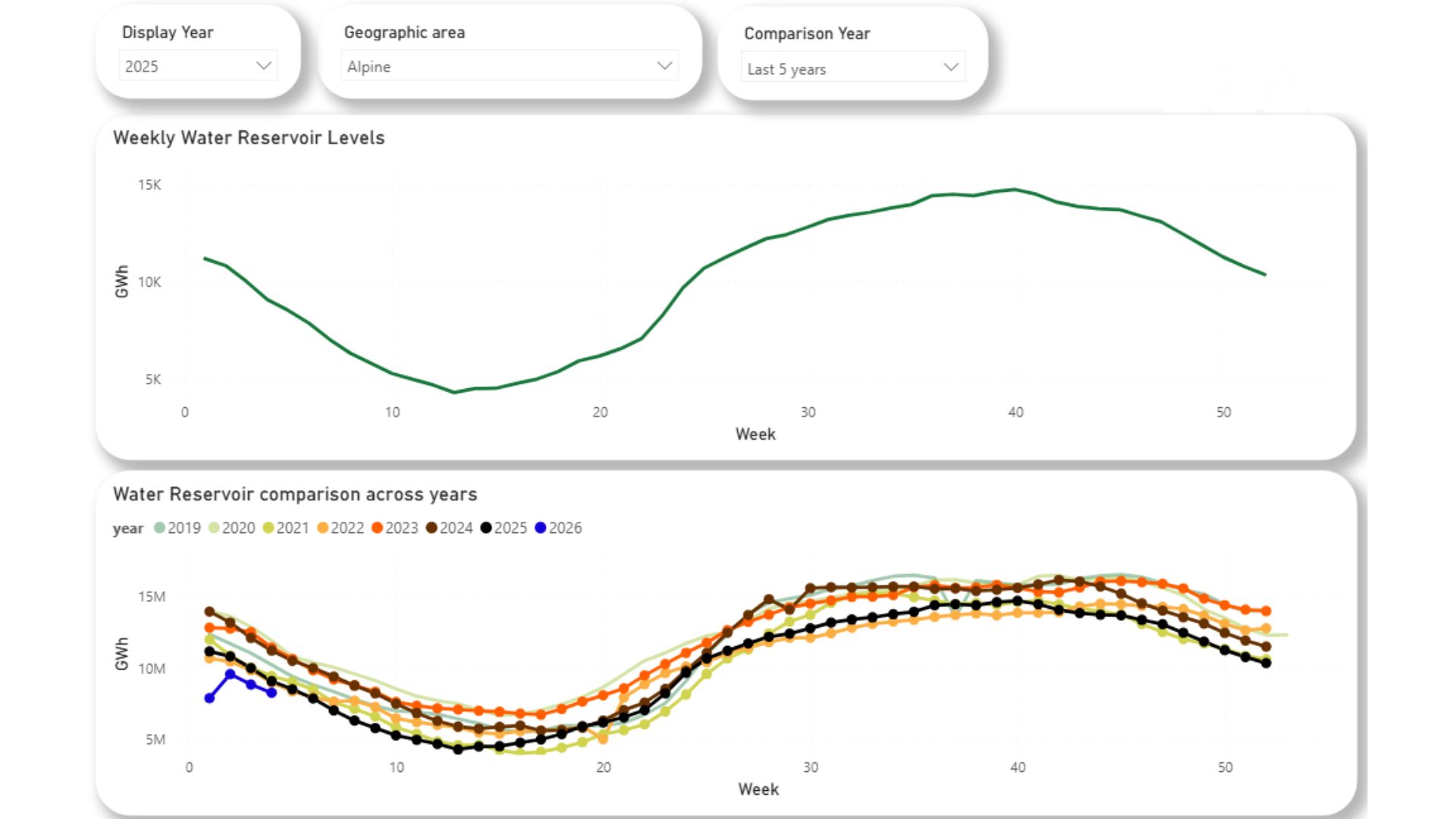
This trend is reinforced by hydrological conditions: in 2025, water reserves have not replicated the particularly favourable levels observed in 2024 and, in some European areas – especially across the Alpine region – initial conditions appear weaker, with similarities to the poor hydrological situation observed in 2022.

Five-year market price evolution of HWS GOs – production periods 2025–2026–2027

Figure 2: Water-reserve levels in the Alpine region

Source: Nvalue’s elaboration of data from national sources including RTE, Nord Pool Spot, SFOE, and other official information sources.

Outlook to 2030

Looking to the medium term, multiple European scenarios converge on a key point: demand for renewable electricity is expected to grow significantly by 2030. The electrification of transport, heating, and industry will drive a structural increase in electricity consumption.

In this context, sector analyses estimate that renewable electricity consumption in Europe could increase by up to around 60% compared to current levels, provided that the deployment of electric vehicles, heat pumps, hydrogen infrastructure, and data centres continues.

This scenario implies growing competition for access to renewable electricity and related tracking instruments. Looking ahead, the availability of green electricity and Guarantees of Origin will depend not only on installed capacity, but also on the pace of demand growth across sectors.

Bullish factors likely to increase the cost of Scope 2 emissions abatement

Looking ahead, several bullish factors are not yet fully reflected in current GO prices. These relate to both the supply and demand sides, as well as regulatory and methodological changes.

On the supply side, a reduction in auctioned volumes has been observed, particularly from the GSE, with approximately 40 TWh less than in 2024. This is compounded by structural factors such as years marked by poor hydrological conditions and lower hydropower generation, which reduce overall GO issuance.

On the demand side, growing pressure stems from the expansion of data centres and artificial intelligence applications. In Germany, from 2026 onwards, ICT centres will be required to be powered entirely by renewable energy sources, introducing a form of rigid and largely inelastic demand.

From a regulatory perspective, the extension of EU State-aid schemes, the evolution of CSRD and CSDDD requirements, and the involvement of companies responsible for around 88% of European emissions continue to support demand. At the same time, corporate decarbonisation targets are cascading across entire value chains, affecting suppliers and SMEs.

In addition, the adoption of RED II in Norway could lead to increased use of Guarantees of Origin, as the market-based method is expected to be favoured for tracking renewable electricity consumption. Methodological changes of this kind contribute to strengthening demand for traceability instruments, with implications for market dynamics.

Taken together, these factors raise the risk of higher Scope 2 prices over the medium term.

Acting today: cost control, flexibility and credibility

For industrial companies, acting today on Scope 2 coverage offers a dual advantage: securing favourable economic conditions while building a robust, credible, and defensible decarbonisation pathway over time.

Through a structured approach to the Guarantees of Origin market, Nvalue supports companies in defining strategies aligned with their consumption profiles, industrial objectives, and reporting requirements. The focus goes beyond compliance, extending to the integration of Scope 2 decisions into a long-term strategic vision.

The current environment offers a rare combination: prices that remain accessible within a market that presents more upside risks than downside potential. In this scenario, waiting increases exposure to uncertainty; acting today means managing it.


Deepening your understanding of these dynamics today is essential to making informed Scope 2 decisions.

Contact us


Lire la suite

Policy position: opposing mandatory hourly matching in the GHGP Scope 2 guidance

Background

The Greenhouse Gas Protocol (GHGP) is considering making hourly matching electricity consumption with clean energy generation a mandatory requirement for Scope 2 reporting.

While motivated by the goal of accuracy, hourly matching risks undermining both the practicality and effectiveness of corporate decarbonization. It introduces high administrative complexity, distorts market incentives, and excludes smaller actors, all while delivering limited additional climate impact.

Our Position

Hourly matching should remain voluntary, not mandatory. Instead, efforts should concentrate on strengthening standard EAC systems through strict annual matching, as a proven driver of renewable growth and Scope 2 decarbonization.

Why Hourly Matching Misaligns with Market Design

Electricity systems operate within two distinct realities: physical reality and market reality. In physical terms, power grids continuously balance supply and demand in real time. Electrons do not travel directly from a specific producer to a specific consumer but instead oscillate across the interconnected system to maintain frequency and stability.

In market terms, these physical flows are represented through structured mechanisms that ensure reliability, efficiency, and transparency. In Europe, electricity is traded in integrated wholesale markets across several timeframes, including day-ahead and intraday markets where energy is bought and sold before its actual delivery, balancing markets used by system operators to correct real-time deviations, and capacity and ancillary service markets that ensure sufficient resources are available to maintain system security.

Alongside these wholesale markets, book-and-claim energy attribute certificate systems, such as the European Energy Certificate System (EECS), track how and where electricity is generated, enabling consumers to support renewable generation and make credible claims about their electricity use. These two layers work together in a mutually reinforcing way, even though they have distinct functions. The physical grid ensures that electricity flows safely and reliably at every moment, while the market layer supplies the pricing signals, investment incentives, and tracking systems that support long-term efficiency, transparency, and the expansion of renewable energy.

Mandating hourly matching conflates these realities, turning the GHGP into a grid operations standard rather than an accounting framework. It introduces artificial scarcity of “compliance hours” without improving actual emissions integrity.

Hourly EACs would duplicate the time and location price signals already embedded in power markets, while fragmenting liquidity in the EAC market itself. This overlap risks confusing market participants, increasing transaction costs, and discouraging participation in renewable certificate trading. Over time, such fragmentation could reduce the voluntary demand for renewable energy certificates, weakening one of the most effective financing mechanisms for new renewable projects.

Practical and Technical Overcomplication Without Added Integrity

While the idea of hourly matching may appear to improve temporal accuracy, in practice it introduces major administrative, equity, and market challenges that undermine the efficiency and inclusiveness of corporate decarbonization.

Implementing hourly matching would require companies to track, verify, and reconcile 8,760 hourly certificates per facility per year, often across multiple sites, suppliers, and grid regions. The process is highly complex, data-intensive, and costly, demanding new digital systems, integrations, and verification protocols. Instead of focusing on emissions reduction and renewable investment, companies would be forced to divert significant resources toward record-keeping. In short, the system risks prioritizing accounting precision over climate impact.

Only a handful of large corporations,  such as global tech or data center operators, have the technical and financial capacity to manage this level of complexity. For small and medium-sized enterprises (SMEs), the administrative and financial burden would be prohibitive.  A mandatory hourly system is exclusionary by design and would create an uneven playing field, concentrating participation among the largest energy buyers and undermining the open access nature that has made voluntary renewable procurement so successful.

Strengthen What Already Works: Standard EAC Systems

 Standard EAC markets already demonstrate a strong and proven track record of delivering real climate impact. They channel billions in revenue to renewable energy generators, creating stable and predictable income streams that support both the operation of existing projects and the development of new ones. By enabling consumers to choose and financially back clean electricity, these systems drive measurable additionality.

Beyond their environmental benefits, EAC markets are designed for scale and accessibility. They function seamlessly across borders, integrate with a wide range of energy systems, and remain accessible to companies of all sizes, which is why they have become one of the most powerful global tools for driving the energy transition. Tools such as strict annual matching and full consumption disclosure further enhance credibility and transparency while building on what already works, without disrupting market liquidity or participation. Strengthening and expanding this well-functioning foundation is a pragmatic, equitable, and high-impact pathway for continued decarbonization.


Conclusion

Hourly matching is granularity without real impact, a rule designed for ambitious appearance, without delivering concrete outcomes.It would complicate reporting, distort markets, and deter participation, while delivering little additional climate benefit. In our opinion, the GHG Protocol must remain a credible, transparent, and inclusive accounting framework, not a technical compliance hurdle.

To go deeper, Nvalue has produced a dedicated webinar that expands on every point with scenarios and cost implications.

Watch the dedicated webinar


Lire la suite

COP30

COP30: ambition, contradictions, and an energy transition still held hostage in Belém

COP30 arrived with high expectations. After a year of extreme heat, relentless fires, and floods swallowing regions, there was hope that this would be the moment the world accelerated, not hesitated. And Belém did offer some genuine progress. Forest finance finally gained momentum, with new funding commitments and attention to tropical protection. Adaptation finance also saw a significant increase; a welcome response for countries already feeling the brunt of the impacts of the climate crisis before the rest of the world does.

But stepping away from the announcements and into the substance, it becomes clear that the real fault lines of global climate politics still run straight through the energy system. The climate crisis is accelerating; the solutions are known; yet the people with the most oil money continue to have the most influence over whether the world commits to using less oil. That tension shaped everything at COP30.

Finance rises, but we are spending more on surviving the crisis than stopping it

Countries agreed to triple adaptation finance by 2035 and backed the Baku–Belém roadmap mobilising roughly US $1.3 trillion a year. Adaptation, in plain terms, means paying for the damage we can no longer prevent: building defences, relocating communities, reinforcing infrastructure. It is vital, overdue, and it is a step in the right direction.

Yet the imbalance is striking. We are investing breathtaking sums to deal with consequences, while still dodging the most important choices needed to prevent the crisis from worsening. As BBC reporting showed, vulnerable nations left Belém grateful for the funding but deeply frustrated that fossil-fuel emissions, the root cause, remained largely untouched, and often undiscussed.

Sustainable fuels are set to ramp up, to an extent

One of the most enthusiastically announced outcomes was the Belém 4× pledge: a commitment to quadruple the production and use of sustainable fuels like hydrogen, biomethane, biofuels, and synthetic fuels by 2035. It sends a welcome signal that governments see clean fuels as essential for sectors that cannot fully electrify.

But there is an uncomfortable truth underneath. Quadrupling sounds bold until you remember how tiny many of these markets still are. When you multiply a very small number, you still end up with a small number. An absolute-volume commitment might have shown more certainty, however, the signal matters. Scaling sustainable fuels will be part of the long-term solution, just not if they are used as a shiny distraction from the bigger conversation about fossil-fuel decline.

Fossil fuels were once again the issue everyone danced around

And here lies the heart of the problem at yet another COP. For the third consecutive COP, countries failed to agree on phasing out fossil fuels. Delegates delivered stirring speeches about innovation and resilience, although they cautiously beat around the uncomfortable bush that is oil and gas, as production continues to rise in several major economies.

Vulnerable nations called this “a painful step backwards”, and scientists warned it undermines the credibility of every other achievement. Many observers wondered how the world can spend trillions adapting to climate breakdown, while refusing to name the industry driving it.

Article 6 moves forward, but the integrity debate refuses to die

Moving on, everything related to Article 6, the section of the Paris Agreement that governs international carbon trading, amounted to incremental improvements rather than anything transformative. Delegates agreed to give older CDM projects more time to transition into the new UN-supervised 6.4 mechanism, and they asked for updated methodologies and stronger community safeguards to lift overall quality.

Still, the same structural weaknesses remain. Some countries pushed to soften environmental rules that protect against unreliable or short-lived carbon credits, and although those attempts were stopped, the final Article 6.2 outcome remains weak on transparency and oversight. In practice, this means the market will keep expanding, although not all credits entering it will meet the standards needed for credible climate claims. The integrity debate is far from solved, and COP30 made that explicit.

Implementation platforms take shape, though without resolving the core contradiction

Finally, the Global Implementation Accelerator and the Belém Mission to 1.5 °C were introduced as new tools to help countries turn their plans into action. They are constructive additions, although they do not answer the central question everyone quietly acknowledged; implementation cannot succeed while fossil-fuel production remains untouched.

Without resolving that contradiction, these platforms risk becoming well-intentioned placeholders rather than transformative engines.

What this means for corporate energy and climate strategy

The takeaway for companies is clearer than the politics:

  • Keep pursuing transparent and verifiable renewable-energy procurement; it remains the backbone of credible decarbonisation;
  • Expect rising demand for certified sustainable fuels, although track the real-world scaling rather than the headline pledges;
  • Navigate carbon markets with discernment, because Article 6’s progress does not mean all credits are equally credible; and
  • Focus on genuine emissions reductions across operations and supply chains; waiting for political alignment is not a strategy.

A closing thought

COP30 will be remembered as a summit of ambition and contradiction, not too dissimilar to COP29, or COP28 for that matter. It advanced forest protection, strengthened adaptation finance, and boosted sustainable-fuel visibility. But it also exposed the persistent unwillingness to confront fossil-fuel production head-on, even as climate damages grow more severe, more expensive, and far more visible across the globe.

The climate crisis is moving quickly, but politics is not. That gap is precisely where companies need to lead; by securing credible renewable energy, investing in clean-fuel pathways, and reducing emissions in ways that survive scrutiny.

If you’d like a clear path for what to prioritise next, from clean energy to credible decarbonisation, we’re ready to support you.

Contact us


Lire la suite

Another turn in the EU’s sustainability Omnibus package story

The EU’s sustainability Omnibus package landed as a shock from the very beginning. Its introduction earlier this year immediately raised alarms across the sustainability community, not because it adapted existing rules, but because it signalled a fundamental scaling back of the EU’s green-reporting ambitions. Then, in a surprise secret vote in late October, the European Parliament rejected the simplification measures, which for a moment seemed like a pause in the rollback tide. Shortly afterwards, however, the Parliament adopted a negotiating position on 13 November 2025 that restores many of the most significant reduction measures.

This drama illustrates how the regulatory pathway for corporate sustainability in Europe remains far from stable, where ambition and retreat exist side-by-side in uneasy tension. Many stakeholders across the sustainability landscape have expressed frustration and dismay. In a moment of intensifying climate risk, the vote threatens to relegate reporting obligations to, as some have called it, little more than “performative exercises”.

What the decision means in practical terms

The vote tally was 382 in favour, 249 against, 13 abstentions. The amendments introduced by the Parliament on Omnibus include:

For the Corporate Sustainability Reporting Directive (CSRD):

  • Companies will now fall into scope only if they have more than 1,750 employees and net turnover of more than €450 million.
  • Companies that are mere holding companies, without EU operating subsidiaries, may now be excluded.
  • Reporting entities will be prohibited from seeking information from value-chain partners with fewer than 1,750 employees or €450 million turnover, except where standards explicitly allow.

For the Corporate Sustainability Due Diligence Directive (CS3D):

  • The thresholds have been raised so that only companies with more than 5,000 employees and net worldwide turnover of more than €1.5 billion will be in scope.
  • The requirement to adopt a climate-transition plan (Article 22) has been removed.

The position adopted narrows scope significantly, limits reporting obligations, and weakens certain supervisory or liability features.

Why sustainability reporting remains economically essential

Even in a time where regulatory demands may soften, robust sustainability data and thorough due-diligence practices continue to matter. They are central to risk-management, to market credibility, and to future business positioning.

Risk management and resilience

Deployment of high-quality data helps companies identify how climate change, biodiversity loss and human-rights issues may affect operations or supply chains. These influences penetrate the financial ledger: from increased insurance premiums to disrupted supply lines, from heightened regulatory penalties to shifts in investor sentiment. Being transparent and prepared provides resilience when conditions shift.

Access to capital and competitive edge

Banks, investors and large corporate customers continue to press for credible ESG information, no matter how the law evolves. Market expectations often outpace legislation. Businesses that stay disciplined with their disclosures frequently enjoy better financing terms, higher trust among stakeholders and clearer alignment with supply-chain demands.

Strategic value creation

Far from a mere compliance exercise, sustainability disclosure now speaks to long-term strategy. Clear transition plans and transparent metrics help customers, partners and investors assess how a company intends to navigate the low-carbon economy. For organisations using energy-attribute instruments such as GOs, i-RECs or other EACs, credible baseline data and ongoing traceability remain essential to telling a genuine decarbonisation story. In this light, sustainability is shaping business growth, innovation and procurement, not just fulfilment of reporting obligations.

Looking ahead

The Parliament’s mandate now moves to trilogue negotiations involving the European Commission and the Council of the European Union. The final directive has not yet been adopted, and its exact form may shift as the legislative process progresses.

For companies, this moment should not be read as a cue to reduce ambition. Despite the regulatory tone, investor expectations, supply-chain dynamics and market pressures continue to lean toward greater transparency. Those who continue to move ahead now will be better prepared when clarity and stability eventually return.


A note of hope

While the outcome of the vote may be disappointing for many in the sustainability ecosystem, it does not mark the end of efforts for effective corporate disclosure. The broader need still remains clear though, with the goals of the Paris Agreement, the commitments to nature and human-rights, and the shifting preferences of investors all continue to drive demand for real, verifiable sustainability action.

In that sense, the latest vote may serve as another wake-up call, rather than a final verdict. For companies willing to maintain strong transparency and align business strategy with sustainability in earnest, there remains a path forward. The regulatory rules may shift, but the fundamental logic of sustainability as strategic value remains unchanged.

Nvalue will follow the progress closely and share updates with you.

Contact us


Lire la suite

GHG Protocol Debate Re-Source

The GHG protocol debate: who gets left behind in the push for precision?

The Greenhouse Gas Protocol, the world’s most influential emissions-accounting standard, is under revision, and what happens next could reshape how companies report, act, and define progress.

At Re-Source 2025, one of the most talked-about side sessions, “Evolving ESG Strategies: What You Need to Know About the Greenhouse Gas Protocol and SBTi,” unpacked what these changes could mean in practice. It wasn’t a polished, everyone-agrees-with-everyone panel. It was tense, opinionated, and refreshingly honest.

The revision

The GHG Protocol is undergoing its biggest update in more than a decade and the proposed changes could redefine what counts as credible decarbonisation and who gets to claim it.

Depending on who you ask, the revisions are either a long-overdue clean-up to restore legitimacy to carbon reporting, or a bureaucratic overcorrection that risks making participation nearly impossible for most companies.

The market-based method under scrutiny

One of the first topics to ignite debate was the market-based method itself. It’s a common misconception, one we didn’t expect to see resurface, but it remains the first point of concern for many.

The criticism goes that buying unbundled Energy Attribute Certificates (EACs) is just a paper exercise, a convenient way to make green claims without real impact. But that view misses the bigger picture. The market-based method is what unlocked private capital for renewable generation in the first place by allowing companies to purchase certificates representing renewable electricity attributes. It created a transparent, verifiable mechanism to stimulate demand, and with it, investment.

Since its introduction, this approach has channelled billions into renewable projects worldwide, with entire markets having been built on its foundation. It isn’t without flaws, but it’s effective and it has played a decisive role in shifting corporate behaviour towards clean energy.

For a deeper look at why the market-based method isn’t greenwashing and why it remains one of the strongest tools for scaling renewable demand, read our breakdown here.

From “Good Enough” to “Granular”

The session quickly turned to what many saw as the next big pivot, and why most of us were in the room in the first place: granularity.

The proposed update would require renewable electricity reported under the market-based method to be hourly matched with consumption and sourced from within the same grid region or bidding zone.

In theory, more precise data should make reporting more credible. In reality, very few organisations can reach that level of detail. Even major corporates with vast energy portfolios find that aligning consumption and generation hour by hour is technically demanding and not necessarily more impactful.

Meta shared their 2023 study with the room, which illustrates this point. Under the standard annual method, Meta’s reported electricity emissions were near zero, supported by more than 15 GW of long-term clean-energy contracts covering its entire annual use. When reassessed hourly, Meta achieved a 79 % Carbon-Free Energy (CFE) score, which they highlighted was impressive on paper, but far less meaningful once grid congestion, transmission losses, and regional variations were considered.

The analysis further showed how hourly matching can distort priorities. It’s easier to achieve precise hourly matches in places like California, where renewables dominate and data are plentiful, than in regions that still rely on fossil fuels; the ones that actually need investment most.

A question of fairness

Granular data is appealing if you’re a global tech company with the infrastructure to analyse it. But what about everyone else?

Across Europe, 99.8 % of companies are small or medium-sized enterprises. These are the manufacturers, logistics operators, and service providers forming the economic backbone of the continent. Most lack access to hourly consumption data or the capacity to source certificates within defined market zones.

If the new Protocol demands such precision, it risks excluding the majority of businesses that are genuinely trying to decarbonise, exposing a deeper structural problem. Several speakers warned that the discussion is increasingly shaped by those with the resources to meet ever-stricter criteria, and others stressed that if the system only serves the biggest players, it fails its purpose entirely.

The overwhelming majority seemed to nod in agreement with claims that this isn’t about perfection; it’s about practicality. Decarbonisation must happen in numbers, and although large corporates should lead with precision and transparency, smaller ones must be supported and encouraged to act as well, not deterred.

Boundaries that bind

Another contentious proposal is the tightening of market boundaries, redefining the regions within which EACs can be sourced and counted toward a company’s inventory.

In Europe, these boundaries are expected to align with ENTSO-E bidding zones, which, in countries like Italy, could create several (up to five) separate market areas. While this might improve data consistency, it could also restrict flexibility for certificate buyers.

With fewer eligible options, companies will have less room to manoeuvre and likely less impact overall. A certificate from a region with a dirtier grid can deliver a far greater emissions benefit than one from a cleaner system, yet under the new structure the former might no longer qualify.

For organisations operating across multiple regions or bidding zones, the implications go beyond impact. Managing separate accounting and sourcing requirements would bring new layers of administrative cost unrelated to renewable energy itself; costs that could discourage participation and push companies to focus only on their largest sites, leaving smaller operations behind.

It’s a case of accounting accuracy overshadowing climate logic: a trade-off worth questioning.

GHG Protocol

Quality or Scale?

Underlying it all is a simple but uncomfortable dilemma. Should the GHG Protocol prioritise perfect accuracy or broad participation?

Some argued that companies should only report if they can supply fully granular data. Others countered, more pragmatically, that waiting for perfect datasets is just another way to delay progress.

What often gets lost in these debates is that the existing Protocol already works. It has helped drive hundreds of terawatt-hours of renewable procurement and guided billions in investment. Through the market-based method, companies of all sizes have found a credible way to support renewable generation and track progress transparently. Without it, we would likely be years behind where we are today.

So, where do we stand?

At Nvalue, our position is clear. We support the market-based method, not because it’s perfect, but because it’s pragmatic. It enables participation across industries, countries, and company sizes. It creates incentives for renewable investment, not just reporting.

We are not in favour of increased granularity, not because we oppose better data, but because we oppose turning “better data” into a luxury.

The revised GHG Protocol must remain inclusive, practical, and focused on outcomes rather than optics. If it ends up serving only those who can afford hourly-matching algorithms, it will have missed its purpose entirely.

As one participant noted, if you build the perfect system that no one can use, what exactly have you achieved?

The bigger picture

Standards like the GHG Protocol are not natural laws; they’re voluntary frameworks. Their power lies in adoption, not enforcement. They shape corporate behaviour, steer investment, and, crucially, define what “counts” as progress. If we make them so complex or costly that companies choose not to participate, we risk losing the very momentum that has made them effective in the first place.

Over the past decade, that imperfect definition has driven one of the largest voluntary movements in clean energy history. Companies bought certificates, reshaped procurement strategies, and directed capital toward renewables on an unprecedented scale.

So yes, the system could use refinement, but we should be careful not to perfect it out of existence.

Our hope for the revision

As the consultation continues, our hope is straightforward: listen to the many, not just the loud. It’s easy to design a standard that works for the world’s richest corporations. It’s harder, and far more important, to build one that empowers everyone else.

The GHG Protocol has never been about perfection. It’s been about progress. We vote to keep it that way. Nvalue will track the progress and keep you informed.

Contact us


Lire la suite

From Baku to Belém: where COP29 left us and what COP30 now must deliver

As the world heads towards COP30 in Belém, the climate negotiation process stands at a critical juncture. Science is now unequivocal, and we are already in the final years of the remaining carbon budget for 1.5°C, with every fraction of a degree of additional warming translating directly into higher physical risks, and higher adaptation costs.

COP29 in Baku established a new, higher finance target — but did not define the instruments and rules for delivering it. The central questions are increasingly operational – how fast emissions fall, how climate finance is structured, and how the transition is governed in a way that is economically and socially workable. COP30 will therefore be a critical moment to convert scale into structure, and to turn general agreement on direction into actionable systems.

After Baku: unresolved structural gaps

COP29 in Baku will be remembered primarily for agreeing a new and higher climate finance target of 300 to 400 billion dollars per year by 2030. This is structurally significant because it acknowledges the scale of capital required for transition in emerging markets. However, it stopped there. No burden sharing model was agreed. No definition of what counts as climate finance was settled. There is no clarity on the balance between public and private flows, nor any safeguards to prevent the transition from being financed through additional debt for already highly indebted countries.

In parallel, negotiations on carbon markets (Article 6) again failed to close key technical gaps. Verification, integrity standards, and double counting rules remain unfinished. The global fossil fuel phase out language agreed at COP28 was not operationalized into sectoral or national pathways. Adaptation finance and Loss and Damage finance remain underdeveloped in terms of predictable annual replenishment and access modalities.

In Belém: from ambition to operating system

COP30 in Belém is positioned as the moment where climate diplomacy needs to convert strategic direction into practical systems. The finance architecture is the most central task, and agreement is needed on who pays how much, what instruments are used, how money is deployed (grants, concessional capital, guarantee structures) and how delivery is monitored with transparency and accountability.

The fact that Brazil is hosting in the Amazon brings an additional layer of relevance and urgency. COP30 is expected to elevate forests, land use, biodiversity and food systems from side streams into a main pillar of climate action and finance. COP30 is also the formal deadline for countries to submit their next round of Nationally Determined Contributions (NDCs) under the Paris Agreement’s ratchet-up mechanism, making Belém the decisive moment to secure economy-wide commitments that go beyond mitigation and also integrate adaptation, finance and loss-and-damage. And there will be renewed pressure to take the “transition away from fossil fuels” language and translate it into actual phase out trajectories aligned with 1.5°C.
At the same time, the 2025 US decision to withdraw again from the Paris Agreement has introduced additional geopolitical uncertainty that will inevitably shape how robust and enforceable any finance system can become in Belém.

As the world marks 10 years since the Paris Agreement, credibility now depends less on new targets and more on the construction of rules, traceability and enforcement. COP30 will not be assessed by its declarations, but by whether it produces systems that actually drive measurable implementation, closing what COP29 could not.


Nvalue will continue to closely monitor the developments and outcomes of COP30. Stay tuned for our full wrap-up article coming soon.

Contact us


Lire la suite

VSME

VSME: a new framework for sustainability in European SMEs

With the progressive rollout of the CSRD and ESRS, sustainability reporting has become mandatory for all large European companies. But what about SMEs, which are often asked to provide ESG data to clients or financial partners, without themselves being directly subject to the directive?

To bridge this gap, EFRAG and the European Commission published the VSME (Voluntary Sustainability Reporting Standard for non-listed Micro-, Small-, and Medium-sized Enterprises) in December 2024: a voluntary standard designed to harmonize and simplify extra-financial communication for SMEs, while safeguarding their competitiveness. While the framework brings several advantages, it is not without controversy—this article explores both sides.

What is the VSME?

The VSME is a voluntary, harmonized framework intended for non-listed SMEs in Europe. It aims to provide them with a simple, proportionate, and widely recognized way to communicate their sustainability commitments and performance, without facing the complexity of the ESRS imposed on larger companies under the CSRD.

In practice, the VSME acts as a common language between SMEs and their stakeholders, streamlining ESG data exchanges across the value chain.

What are its objectives?

The initiative provides SMEs with a pragmatic framework to address the growing importance of sustainability. Under pressure from clients, investors, banks, and public procurement, SMEs need to demonstrate their ESG commitments without being overwhelmed by administrative burdens.

Concretely, the VSME seeks to:

  • Reduce the administrative burden: by replacing multiple, often inconsistent ESG questionnaires with a harmonized set of indicators.
  • Facilitate access to sustainable finance: by equipping SMEs with transparency tools that strengthen their credibility with financial stakeholders and help them showcase their environmental and social initiatives.
  • Support integration into public procurement and responsible supply chains: by meeting the rising demand from buyers for tangible ESG evidence in partner selection.
  • Prepare for the future: by familiarizing SMEs with regulatory expectations in sustainability reporting, anticipating the likelihood of more stringent requirements ahead.

A two-tier standard

To avoid placing excessive strain on companies willing to engage, the VSME was designed with two reporting modules, allowing for a gradual approach depending on maturity levels:

  • The “basic” module
    Covers a limited yet essential set of indicators (greenhouse gas emissions, energy consumption, anti-corruption practices, key social data, etc.).
    Objective: enable any SME, even those less experienced with ESG, to provide a credible minimum set of information.
  • The “comprehensive” module
    Provides a broader and more narrative-based approach.
    Objective: allow companies to meet more advanced ESG expectations, for example from institutional investors or large corporations subject to the CSRD.

This modularity makes the framework flexible and better suited to the diversity of European SMEs.

VSME: What are the benefits for SMEs?

The VSME was designed as a practical response to SMEs’ need for clarity and proportionality in sustainability reporting. It allows them to move forward step by step, reaping the benefits without being crushed by the requirements imposed on larger companies:

  • Standardization: a single, EU-recognized format that replaces the jungle of multiple and sometimes contradictory requests from clients, investors, or financial institutions.
  • Flexibility: the ability to tailor reporting levels to the company’s resources, maturity, and priorities, enabling SMEs to progress at their own pace.
  • Credibility: developed by EFRAG and validated by the European Commission, the standard carries strong institutional legitimacy and recognition across the business ecosystem.
  • Future readiness: a first step toward more advanced sustainability practices, helping SMEs anticipate future obligations without immediate regulatory pressure.

A framework under scrutiny

While the VSME’s main purpose is to simplify SME reporting, it has also raised concerns. Several stakeholders—experts, investors, and business representatives—point to unresolved issues that could limit its effectiveness:

  • Divergence with the ESRS: large companies must publish more stringent data, especially on Scope 2 emissions. The VSME currently only requires the location-based method, making the market-based method (linked to Guarantees of Origin) optional. This gap could complicate data alignment between SMEs and larger corporations.
  • Risk of two-speed reporting: SMEs sticking to the basic module may provide information seen as too limited by certain investors, weakening the standard’s added value as a bridge to sustainable finance.
  • The real burden for SMEs: even simplified, reporting requires time, expertise, and sometimes digital tools—resources that smaller firms may lack, especially given their already heavy administrative workload.

Key takeaways

By offering a voluntary, simple, and recognized framework, the VSME addresses a real need for clarity and proportionality in an environment where ESG requests are multiplying.

Its main strengths make it a promising tool to enhance SME competitiveness across the value chain. However, challenges remain: the risk of a two-tier system, divergences with large-company standards, and the practical burden for smaller firms.

The effectiveness of the VSME will therefore hinge on two commitments:

  • From SMEs, to gradually adopt and leverage the framework.
  • From large companies and investors, to acknowledge the standard’s legitimacy and refrain from demanding more than it requires.

Ultimately, the VSME could become a genuine bridge between SMEs and the sustainable finance ecosystem—provided the balance between simplicity and credibility is preserved. More than a technical standard, it represents a strategic lever to help SMEs prepare for tomorrow’s requirements while staying competitive today.


Want to know how the VSME can fit into your business practices? Nvalue’s team will guide you step by step in setting up your sustainability reporting.

Contact us


Lire la suite

decarbonisation SME

What Happens When SMEs Ignore Decarbonisation?

Micro, small and medium enterprises (SMEs) represent 99% of all businesses in Europe and two-thirds of total private sector employment, yet most of these enterprises remain without a structured plan for reducing their greenhouse gas emissions.

Standing still now comes at a cost — including higher energy bills, tougher financing, exclusion from tenders, and a growing reputational gap. Since SMEs form the backbone of supply chains, inaction doesn’t just put them at risk — it weakens the corporates that depend on them.

When SMEs stall on decarbonisation, supply chains stall with them. And when supply chains stall, entire industries lose credibility. Therefore, understanding what is at stake — and what practical steps SMEs can take today — is critical for resilience and competitiveness.

Why sustainability still matters

Political winds are shifting. Across Europe, right-wing parties are gaining ground, often campaigning against perceived “green overreach.” In the United States, the Trump administration has already signalled a reversal of many climate and sustainability initiatives. Even within the EU, once a global leader on climate policy, momentum has slowed.

For many SMEs, this creates confusion. If politics is turning away from sustainability, does it still make sense to invest? The answer is yes — but only if we see sustainability for what it really is: the capacity to endure over the long term.

Companies that dismiss it as a passing fashion risk missing the point: while labels may change, the underlying drivers remain. Energy efficiency, risk management, and resource optimisation are not political slogans; they are business fundamentals.

Why SMEs can’t afford inaction

While political headwinds may change the language, they aren’t going to change direction. Pressure to decarbonise now comes from all sides — clients, financiers, and the market itself. Companies that anticipate and manage these risks will continue to be rewarded, regardless of political trends.

This dynamic plays out most clearly in supply chains. With the Corporate Sustainability Reporting Directive (CSRD), large companies must disclose material impacts across their value chains. Under the recent Omnibus simplification proposal, this obligation is tempered by a so-called “value-chain cap”, limiting how far reporting companies can demand data from upstream and downstream partners.

While this adjustment may reduce the immediate burden on smaller firms, it does not eliminate it. SMEs remain central to corporate disclosures, and many will still be asked to provide emissions or energy data, particularly if they are tier-1 or tier-2 suppliers. Over time, these expectations are likely to deepen — meaning SMEs that delay action risk exclusion from procurement processes.

Finance is the second driver. Banks and investors are under pressure to align portfolios with the EU Taxonomy and Sustainable Finance Disclosure Regulation (SFDR). This translates into greater scrutiny of borrowers’ climate performance, and for SMEs, the absence of a decarbonisation plan may soon mean higher interest rates, restricted access to credit, or even exclusion from sustainability-linked financing.

The market itself is the third driver. Buyers, whether consumers or B2B clients, are increasingly choosing products and services with credible sustainability credentials. Reputation now plays a key role not only in attracting customers but also in retaining talent and securing partnerships.

Despite shifting political rhetoric, evidence shows that younger generations — both as consumers and employees — place greater value on climate and social responsibility. For SMEs, that means the demand for credible action will only intensify.

Taken together, these pressures form a reinforcing loop: supply chain requirements drive data requests, which influence financing conditions, which in turn shape market perception. Inaction by SMEs is therefore not a neutral choice: it is a direct risk to revenue, cost of capital, and competitiveness.

The financial consequences of inaction

For SMEs, the financial risks of ignoring decarbonisation are already materialising:

  • Cost escalation: Reliance on fossil energy exposes SMEs to volatile prices, further amplified by the expansion of the EU ETS into ETS2.
  • Revenue risk: Corporate buyers increasingly embed sustainability requirements into tenders. SMEs unable to comply risk losing contracts to more proactive competitors.
  • Reputational risk: Companies that cannot demonstrate progress appear “behind the curve,” undermining their ability to retain customers and attract talent.
  • Compliance risk: While most SMEs are not directly in CSRD scope, their exposure is indirect. Failing to provide data to corporate partners can strain relationships, trigger penalties, or lead to contract loss.

Practical entry points for SMEs

The good news: SMEs are not expected to decarbonise overnight. What matters most is to demonstrate credible first steps. These actions send a clear signal to clients, financiers, and employees that sustainability is being taken seriously.

  1. Carbon footprinting – establish your emissions baseline

A basic carbon footprint assessment provides SMEs with a credible starting point. Even a high-level calculation demonstrates awareness and commitment.

  1. Energy efficiency – cut waste and save costs

Simple measures — upgrading lighting, optimising HVAC systems, or improving fleet efficiency — deliver immediate savings while reducing emissions.

  1. Energy Attribute Certificates (EACs) – address Scope 2 emissions

One of the most straightforward options for SMEs is the use of Energy Attribute Certificates (EACs) — including Guarantees of Origin (GOs) in Europe, I-RECs internationally, and RECs in North America.

By purchasing and cancelling these certificates, companies can credibly report renewable electricity use under the Greenhouse Gas Protocol (GHG Protocol). For SMEs facing supply chain pressure, EACs offer a fast, credible solution to reduce Scope 2 emissions and show commitment while preparing for long-term strategies.

  1. Sustainability ratings and certifications – demonstrate credibility

Recognition through platforms such as EcoVadis, CDP, or local sustainability labels helps SMEs benchmark performance, prioritise actions, and unlock opportunities.

For corporate clients, these certifications provide confidence that SMEs are serious about progress. Even an entry-level score signals commitment and can unlock commercial advantages in tenders and partnerships.

Inaction is not neutral

For SMEs, ignoring decarbonisation carries economic and financial risks that will only grow — including supply chain exclusion, reduced financing options, higher energy costs, and reputational damage.

The solution does not need to be complex. By starting with carbon footprinting and adopting accessible tools such as Energy Attribute Certificates, SMEs can demonstrate credible progress, satisfy client expectations, and enhance competitiveness.


Nvalue will be hosting an upcoming session dedicated to SMEs and the importance of decarbonisation. We will unpack practical steps, show how energy certificates can be applied effectively, and share insights on how SMEs can future-proof their businesses in a rapidly changing market.

Join us to explore how SMEs can move from risk to resilience, and why ignoring decarbonisation is no longer an option.

Register


Lire la suite

Notes from Climate Week NYC & IETA NACS

Notes from Climate Week NYC & IETA NACS

Cutting Through the Noise for Corporate Buyers

This year’s Climate Week in New York, alongside IETA’s North America Climate Summit, offered a clear view of where corporate decarbonisation is heading and where buyers can act with confidence today. Across CEBA sessions, investor-facing panels, and market deep dives, three threads kept reappearing: procurement must be de-risked, disclosures must be decision-useful, and data must travel cleanly across systems. In a crowded week, these were the signals worth keeping.

From strategy to execution

At CEBA’s member forum the conversation was refreshingly pragmatic. Buyers are recalibrating toward portfolios that mix long-term instruments with near-term impact. Traditional PPAs remain central for companies with the balance sheet and load profile to match tenor and risk. Yet many are right-sizing exposure by complementing PPAs with unbundled EACs, GO and I-REC strips, and shorter structured options to maintain progress while markets and internal approvals catch up. The shared objective was resilience: keep Scope 2 momentum visible quarter by quarter, while larger assets move through diligence, interconnection and financing.

What this means for a buyer: treat procurement as a curve, not a point. Lock in foundational positions where you can, then maintain coverage and optionality with diversified certificates and forward strips. A portfolio approach reduces timing risk and communicates continuity to internal stakeholders.

Disclosures that investors can actually use

Panels hosted like the one by Agendi moved past slogans to the mechanics of climate reporting. The direction of travel is clear. ISSB and TCFD concepts are informing rules in California and the EU, and the market is converging on a small set of expectations: align risk to cash flows, show governance, quantify Scope 1–3 with defensible methods, and explain variance over time. The most credible reports are folding sustainability into the financial narrative, not publishing it alongside. Assurance is moving from a nice-to-have to a natural extension of investor relations.

What this means for a buyer: build your energy procurement story the same way you would a capital allocation memo. Link instruments to exposure, explain why a PPA here and a certificate strip there, specify the controls on data quality, and prepare for limited assurance. The question is no longer if climate information is investment-grade, but when yours will be.

Speed without theatre

A recurring theme at the week’s workshops was friction at the enterprise edge. Startups spoke candidly about pilot projects that stall between enthusiasm and execution. Corporates described internal handovers that add six to twelve months before decisions land. The way through is not more theatre. It is operational clarity, credible measurement, and well-chosen partnerships that shorten cycles without inflating claims.

What this means for a buyer: ask vendors for the simplest path to measurable outcomes in the next two quarters, then scale. Scope 3 initiatives benefit from the same discipline. Prioritise supplier cohorts where data can be gathered and verified, use consistent methodologies, and be transparent about baselines and limits. Progress compounds when definitions are stable.

Markets that are maturing, not pausing

IETA and NACS sessions confirmed what many suspected. Compliance systems are deepening and aligning, voluntary markets are tightening around quality, and Article 6 is moving from concept to frameworks with real accountability. Aviation’s CORSIA and state leadership in North America are reinforcing the signal that carbon markets will remain part of corporate pathways, provided integrity standards are met. Data interoperability matters here. Certificates, claims, and audits must move smoothly across registries and reporting systems. Buyers are asking for fewer platforms, fewer spreadsheets, and a single chain of custody for evidence.

What this means for a buyer: choose market instruments that can be traced, audited, and defended. Ask how issuance, retirement, and claims will be documented against your ledgers and reports. If an instrument improves decarbonisation optics but complicates assurance, it will cost you time later.

PPAs, certificates, or both

A useful rule emerged during side-room discussions. If your primary objective is cost and hedge value, look to procure EAC strips on a multi-year period or if you’re able to withstand the long-term risks of 15 year or longer contracts, VPPAs or PPAs could be a better fit. If your objective is coverage, speed, and geographic breadth while maintaining the same tracible impact that comes with longer term arrangements, prioritise EACs, GOs, and I-RECs with transparent provenance and quality screens. Most programmes will need both. The art is phasing. Many buyers indicated near-term actions in October and November to secure 2025 coverage while 2026–2028 assets are evaluated.

What this means for a buyer: time your instruments to your objectives. Fix what you can fix quickly. Build what must be built carefully. Report both with the same precision.

Assurance is becoming the default

The week also underscored that assurance is not only about avoiding greenwash. It is about trust between functions. When risk, finance, sustainability, and investor relations share a single view of data lineage and control, internal debates shorten and external conversations improve. Auditors will not solve strategy, but they will clarify signals. That is valuable in a noisy market.

What this means for a buyer: assume your disclosures will be read by people trained to reconcile numbers. Organise your energy data so that it can be assured with minimal translation. You will move faster when you do.


A Swiss perspective

At Nvalue we take a measured view. Markets reward clarity, not volume. Instruments are tools, not ideologies. The best programmes are rigorous, calm and repeatable. Our role is to help buyers assemble portfolios that are defensible today and adaptable tomorrow, with documentation that travels cleanly from procurement to reporting. It is less about promising the perfect system and more about delivering progress you can account for while the system continues to mature.

The path ahead

Climate Week and NACS did not produce a single answer, and that is healthy. They did clarify how buyers can cut through the noise.

  • Build a portfolio, not a headline.
  • Tie instruments to risk, cash flows, and disclosure.
  • Demand data that can move from meter to audit.
  • Use assurance to speed decisions, not slow them.
  • Act in quarters and plan in years.

If you are preparing near-term coverage while designing longer-dated positions, we can help you do that with precision. If you are aligning procurement with ISSB-style reporting and upcoming state or EU rules, we can help you make the controls as strong as the claims. And if you simply need a clearer map of options for PPAs and certificates across geographies, we will give you one that is useful on Monday morning.

Pragmatism and credibility remain the edge. The market is ready for both.

Contact us


Lire la suite

The evolution of Scope 2 standards: between intentions and unexpected consequences

Recently, the International Organization for Standardization (ISO) and the Greenhouse Gas Protocol (GHG Protocol) announced a strategic collaboration to harmonize their existing portfolios of standards and co-develop new ones for emissions measurement and reporting. This marks a crucial moment for global emissions reporting 1.

The goal of harmonizing standards and creating a common language is, without a doubt, commendable. We fully support every effort to improve the transparency and accuracy of environmental reporting. However, some of the proposals from the Scope 2 technical working group, particularly those concerning the debate between the market-based method and the location-based method and the introduction of mandatory hourly granularity (24/7 matching), warrant in-depth discussion.

Our analysis, based on Nvalue’s extensive experience in environmental markets, suggests that a rigid application of these concepts could have unintended negative consequences, risking a slowdown of the energy transition rather than its acceleration.

The deceptive simplicity of the location-based method

The location-based method presents itself as the simplest and most immediate solution. It is based on calculating the average CO2 from the electricity grid in a specific geographical area. It is, in a sense, the method for those who are unwilling or unable to actively source clean energy. This is precisely where the problem lies: its simplicity is deceptive because it completely ignores companies’ proactive choices and investments in decarbonization.

If this approach were to prevail, it would create a deep competitive inequality within the European Union. Consider two companies with the same commitment to sustainability, but located in different countries:

  • A company in Poland, where electricity generated in 2023 had the highest carbon intensity in Europe, would be penalized by a high emission factor (594 gCO2e/kWh in 2023 2), regardless of its efforts to purchase Guarantees of Origin (GOs) or Power Purchase Agreements (PPAs). The market-based method is the only tool that allows it to become virtuous and compete in the global sustainability market.
  • A company in France, with an already low-emission energy mix (thanks to hydro and nuclear, with a carbon intensity of 48 gCO2e/kWh in 2023 3), would see its efforts to invest in new renewable energy sources disincentivized. Why purchase certificates if your impact is already considered low?

In this way, the location-based method rewards merely « being in the right place » rather than actively supporting renewables, removing the incentive to proactively finance the energy transition.

In summary, we believe both methods should be mandated for a complete picture. But if a choice must be made, the market-based approach is the clear leader. It is a more valuable and honest reflection of a company’s commitment to decarbonization, directly linking their active choices to supporting renewable energy instead of passively relying on the existing grid mix. This makes it the most effective method for driving future investment and change.

The dangerous complications of mandatory hourly matching

Beyond the debate over the calculation basis for electricity carbon intensity, the proposal for a mandatory hourly match between renewable energy consumption and production (24/7 matching) raises further concerns.

The premise that electricity must be consumed at the exact moment and location where it is produced is, in the context of an interconnected grid, a flawed interpretation of how the electricity market works. Once an electron enters the grid, it is no longer traceable. The current book-and-claim system doesn’t track the electron; it certifies a company’s conscious choice against a balance sheet that must, by definition, be in equilibrium.

Imposing mandatory hourly granularity would lead to unexpected consequences:

  1. Volatility and Scarcity: The demand for renewable energy certificates during specific hours (e.g., central hours of the day) would create extreme price spikes, rewarding speculation and not genuine investment in new production capacity.

  2. Complexity and Costs: Many companies lack the technological tools to manage hourly reporting. This would require significant investment in expensive IT systems and external consultants, creating a barrier to entry for small and medium-sized enterprises.

  3. Negative Consequences: If renewable energy becomes too complex or costly to report, companies might be pushed towards more stable but less « clean » sources like gas or nuclear, undermining the very goals of the energy transition.


The path to a concrete solution

We are convinced that the goal of transparency can be achieved without imposing rules that harm the market and competitiveness. Instead of insisting on a model based on « laziness » and geography, we propose an approach that values merit and commitment.

We believe a far more practical and effective step is the introduction of a mandatory annual matching obligation, consistent across European regulations and GHGP standards. This would ensure clear and uniform rules of the game, encouraging annual accountability for energy procurement without creating the damaging market dynamics and infrastructural barriers of mandatory hourly granularity.

Currently, matching is not guaranteed by existing European regulations (RED II), which allows the use of Guarantees of Origin for Fuel Mix Disclosure as long as the GO is valid (i.e., within 12 months of its issuance). Some countries (including Italy) have adopted this rule, allowing distributors to use GOs from year n-1 to certify renewable electricity supplies in year n.

The requirement to use GOs issued during year n to certify consumption in year n would be enough to consolidate the credibility of the book-and-claim system, leaving greater granularity (like monthly matching, already used in France) to individual companies’ virtuous choices.

If European regulations mandated annual matching, it would guarantee clear rules for all operators, reward companies’ conscious choices, and send a strong signal for decarbonization, without sacrificing the flexibility and equity needed for genuine progress.

Contact us


Lire la suite

Common myths about EACs and the truth behind them

At Nvalue, we often hear misconceptions about Energy Attribute Certificates (EACs). These certificates are central to credible renewable electricity sourcing, yet they are often misunderstood. Here, we separate fact from fiction and show how EACs can be used effectively as part of a robust decarbonisation strategy.

Common myths about EACs

Myth 1: EACs are a form of greenwashing rather than true decarbonisation

Some critics argue that buying EACs is just a box-ticking exercise; that companies purchase certificates to look greener without making any real change. When sourced and retired correctly, EACs are, however, a credible and transparent way to document renewable electricity use. They are recognised by EU law, the GHG Protocol, RE100, SBTi, and CDP (to name a few) as the standard instrument for market-based reporting.

Proper retirement ensures that each MWh of renewable electricity generation is claimed only once, preventing double counting. Used correctly, EACs are actually the opposite of greenwashing; building trust with stakeholders and strengthening corporate sustainability reporting.

Myth 2: EACs and carbon credits are basically the same thing

This is another common misunderstanding, often coupled with the idea that certificates are only about appearances. Due to the fact that both EACs and carbon credits are market-based instruments, they are sometimes seen as interchangeable.

In reality, while both instruments support climate action, they serve very different purposes:

  • EACs represent the renewable attributes of 1 MWh of electricity generated from sources like wind, solar, hydro, or biomass. Retiring them allows companies to credibly claim the consumption of renewable electricity and reduce their Scope 2 emissions under the GHG Protocol. Importantly, EACs are government-backed, highly standardised instruments with strict registries that ensure traceability and prevent double counting.
  • Carbon credits represent a certified reduction or removal of greenhouse gas emissions, usually measured in tonnes of CO₂ equivalent. They can come from projects such as reforestation, carbon capture, or renewable energy deployment. While valuable, the quality and accuracy of carbon credits can vary significantly, depending on the methodology, project design, and verification standard.

Confusing the two can undermine a company’s climate strategy. EACs are about how you source your electricity and are anchored in government-regulated frameworks, while carbon credits are about offsetting emissions elsewhere and may differ in credibility. Understanding this distinction ensures your decarbonisation plan is both accurate and aligned with international standards like the GHG Protocol and SBTi.

Myth 3: Consuming renewable electricity via EACs has no impact on climate change

Many people assume that buying EACs is meaningless because companies are just buying certificates, not the physical electricity itself. This idea comes from a misunderstanding of how renewable electricity is tracked and claimed.

In regions where tracking systems exist, every unit of renewable electricity sold is coupled with an EAC; the certificate that proves its renewable origin. Without the certificate, renewable electricity cannot be claimed as such. While it’s true that once electricity enters the grid all electrons mix together, EACs are the contractual mechanism that makes renewable sourcing visible, traceable, and claimable.

Hence, EACs are not just paperwork; they are a market tool. When companies purchase and retire them, they create demand for renewable electricity over fossil fuels. This demand provides revenue certainty for renewable energy producers, improving the profitability of projects and supporting the growth of new capacity.

By using EACs, companies directly support the expansion of renewable generation and can credibly report reductions in their market-based Scope 2 emissions. Over time, this demand-driven mechanism helps increase the share of renewables in the overall energy mix and reduce dependence on fossil fuels.

Which leads into the next point: while EACs have real value in reducing emissions, they do so in a very specific way and that’s where another common misconception arises.

Myth 4: EACs allow companies to completely eliminate their CO₂ emissions

Because EACs are used to make renewable electricity claims, some assume they can magically erase a company’s entire carbon footprint. This has led to the belief that simply buying certificates is enough to declare full carbon neutrality.

Though EACs play a very specific, and valuable role, they simply prove that the electricity an organisation consumes comes from renewable sources, and under the GHG Protocol they directly reduce market-based Scope 2 emissions. They do not replace efforts to reduce emissions at the source, nor do they imply a structural transformation of the company to eliminate its greenhouse gas emissions. That said, when a company sources and retires enough EACs to match its electricity use, it can legitimately report its market-based Scope 2 emissions as zero. This is because purchasing and retiring EACs represents a verified contribution of renewable electricity to the grid, which the company can then claim against its own consumption.

Additionally, electricity is only one part of a company’s overall footprint. EACs do not replace efforts to cut emissions at the source or address other scopes, but they are a recognised and essential step in any serious decarbonisation strategy.

Framing EACs correctly highlights their strength: they are the government-backed, audit-ready tool for reducing Scope 2 emissions today. Used strategically, they help companies make measurable progress on their climate targets while laying the foundation for deeper structural changes.

Myth 5 : All EACs are the same

Lastly, it’s true that all EACs certify that 1 MWh of renewable electricity has been generated. That is the common foundation, and what makes them a credible, standardised tool worldwide. But beyond that, EACs can differ in important ways:

  • Market frameworks – In Europe they are called Guarantees of Origin (GOs), in the UK REGOs, in North America RECs, and internationally I-RECs. Each system has its own registry, rules, and level of recognition.
  • Generation sources – EACs can come from different renewable technologies (wind, solar, hydro, biomass), which may carry different perceptions of impact.
  • Policy support – Some certificates come from projects backed by government subsidies, others from unsubsidised or merchant projects.
  • Added value – Some EACs can be combined with ecolabels such as EKOenergy which add environmental and social co-benefits beyond the MWh itself.

What you can always be sure of is that 1 MWh of renewable electricity was produced. But how that certificate is valued, financially, strategically, and reputationally, depends on the market, the generation source, and any additional labels attached. Understanding these differences allows companies to select certificates that best align with their climate strategy and stakeholder expectations.

Best practices to fully leverage EACs

To unlock the full potential of EACs, companies can go beyond basic compliance and adopt a structured, strategic approach:

  1. Integrate into your wider strategy
    EACs are most effective when part of a complete plan that also includes reducing emissions at the source and improving energy efficiency. Together, these measures create a resilient, long-term decarbonisation pathway.
  2. Choose quality and relevance
    All EACs represent 1 MWh of renewable generation, but they differ by market, source, and recognition. Building a portfolio of high-quality, transparently tracked certificates from the right regions and systems ensures your claims are both credible and audit-ready.
  3. Educate your teams
    Because EACs are technical, internal teams across sustainability, communications, procurement, and finance need to understand how they work and how to talk about them accurately. This prevents miscommunication and reinforces trust with stakeholders.
  4. Work with experts
    Markets evolve quickly, and regulations are tightening. Partnering with experienced intermediaries helps you avoid costly mistakes, source certificates strategically, and position your company ahead of both compliance requirements and stakeholder expectations.

Nvalue: supporting your decarbonisation journey

At Nvalue, we guide businesses with confidence on their path to Net Zero.

Our team of specialists helps you design and implement a robust sustainability strategy, including the procurement and management of tailored Energy Attribute Certificates (EACs). Whether you’re initiating your sustainability efforts or accelerating existing commitments, we provide customised expertise and solutions to meet your needs.

Get in touch with us today to start building a credible, transparent, and effective Net Zero roadmap.

Contact us


Lire la suite

Swiss technology exports under pressure from new 39% US tariff, balancing trade challenges with sustainability goals.

US Tariffs risk to put Swiss Sustainability at Risk?

The Swiss technology industry is reeling from a new 39% import tariff on its products entering the United States, a measure that went into effect today. Despite intense negotiations between the Federal Council and the US government, a more favorable outcome was not reached. According to Swissmem, the main association for Swiss technology companies, this « onerous customs duty » will effectively cripple exports to the US, particularly as it puts them at a significant disadvantage compared to competitors from the EU and Japan who face much lower tariffs.

Swissmem, which represents both SMEs and large companies, warns that the consequences extend far beyond a single industry. « If the export industry is doing badly, the well-being of the entire population is also at risk, » the association states. It foresees a domino effect where a downturn in exports could jeopardize funding for social security, healthcare, and infrastructure maintenance, while also threatening jobs in domestic sectors like hospitality, retail, and construction.

In response to what Swissmem Director Stefan Brupbacher calls a « changed world, » the organization has released a 10-point catalogue of urgent measures to bolster the export economy and safeguard Swiss prosperity, and among these are two points specifically addressing CO₂ and climate policy, which the association argues are crucial for maintaining the competitiveness of Swiss businesses:

  • Avoid Exaggerated Climate Policy: Swissmem states that the CO₂ reduction pathway set by the Federal Council is « unrealistic » and poses a significant risk to the industry. The association warns that these policies could force companies to shut down, suggesting that the current approach is too aggressive and threatens the viability of Swiss manufacturing.
  • Reject CO₂ Compensation Mechanism: Swissmem urges Switzerland not to adopt the EU’s climate policies, which it describes as « industry-unfriendly. » The association believes that a CO₂ compensation mechanism would be detrimental, as it would destroy sales markets and endanger Switzerland’s position as a production location.

This reaction highlights a recurring concern: when faced with economic shocks, investments in sustainability and climate action are often the first to be compromised. By framing climate policies as an « unrealistic » burden that could « force companies to close, » Swissmem’s demands suggest that the nation’s efforts to curb emissions and meet climate goals may be sidelined in favour of immediate economic recovery. This presents a critical challenge, as it pits the short-term goal of economic stability against the long-term necessity of environmental responsibility, potentially jeopardizing years of progress in the fight against climate change.


But even in these turbulent times, companies can navigate economic pressures while remaining committed to sustainability. The key is a detailed assessment of how targeted decarbonization initiatives can mitigate risk, enhance operational efficiency, and create durable value within a company’s specific market. Reach out to Nvalue to conduct this analysis and discover how strategic CO₂ reduction can secure your economic competitiveness, proving that environmental responsibility and business success are not mutually exclusive.

Contact us


Lire la suite