Zum Hauptinhalt springen

Autor: sviluppo

The role of EAC in your decarbonization journey

Business decarbonization has become a critical priority in the fight against climate change. As energy consumers, companies have a key role in reducing greenhouse gas emissions by adopting sustainable practices. One of the essential tools to achieve this is the use of Energy Attribute Certificates (EACs).

If you want to learn more about EACs, how they can help you minimize your carbon footprint, and how to implement an effective decarbonization strategy, you’re in the right place.

  • What are EACs ?
  • How do EACs play a role in business decarbonization?
  • How to integrate EACs into your decarbonization strategy?

What are EACs?

  1. Definition and explanation of Energy Attribute Certificates (EACs)

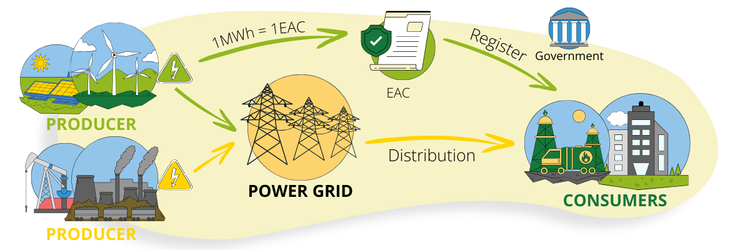
An Energy Attribute Certificate (EAC) is a legal tracking instrument that certifies that the electricity consumed by an entity (a particular consumer or an organization) is sourced from renewable energy. One certificate represents one megawatt-hour (MWh) of renewable energy generated and fed into the electricity grid.

The possession of an EAC generated by a renewable energy installation—whether wind, solar, hydro, or biomass—gives its holder the right to claim the use of green energy and benefit from its environmental advantages.
2. What are the different types of EACs?

Depending on the region and local regulations, several types of Energy Attribute Certificates exist:

  • RECs (Renewable Energy Certificates) in the United States
  • GOs (Guarantees of Origin) in Europe
  • I-RECs (International Renewable Energy Certificates), recognized in various countries in Asia, Africa, the Middle East, and Latin America, I-RECs provide a standardized international mechanism to certify renewable energy consumption globally.
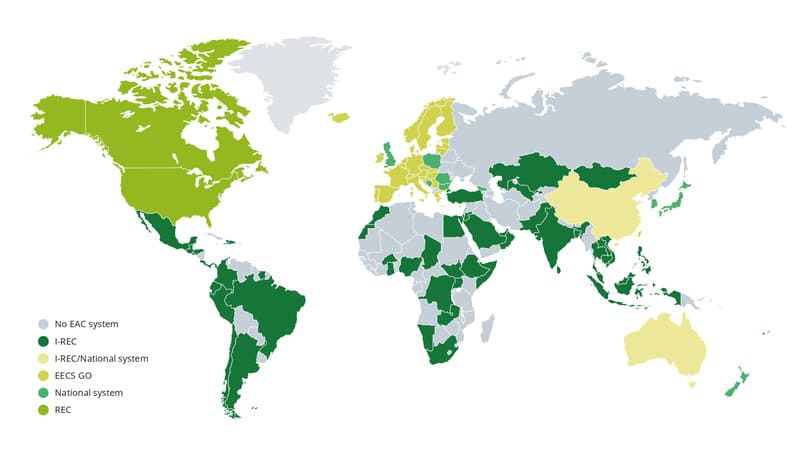
Regardless of the format and the country of issuance, an EAC aligns with international carbon accounting standards, enabling organizations to meet their renewable energy consumption goals.

How do EACs play a role in business decarbonization?

Acquiring EACs meets the Scope 2 requirements of the GHG Protocol. By certifying the use of renewable energy sources, companies demonstrate their commitment to energy transition and carbon reduction. EACs create a virtuous cycle, both directly and indirectly:

  • Direct reduction of greenhouse gas emissions: By purchasing EACs, companies reduce their carbon footprint by offsetting their energy consumption with renewable energy.
  • Incentive for innovation: The growing demand for EACs drives investments in renewable energy infrastructure, fostering innovation and the development of new technologies.
  • Reputation enhancement: Companies that implement a decarbonization strategy through EAC purchases improve their brand image and showcase their commitment to sustainability and environmental responsibility.

How to integrate EACs into your decarbonization strategy?

1. Steps and guidance on incorporating EACs into a company’s decarbonization efforts

The acquisition of EACs should result from strategic planning. Here are key points to consider for an effective decarbonization plan:

  • Assessment of Energy Needs: Start by evaluating your company’s energy consumption and identifying carbon emission sources.
  • Setting Objectives: Establish clear goals for emission reductions and the integration of renewable energies into your overall strategy.
  • Selection of Appropriate EAC Types: Choose the EACs that best fit your needs and objectives, such as RECs for American companies or GOs for those in Europe.
  • Partnership with Certified Suppliers: Collaborate with certified renewable energy suppliers to ensure the authenticity and traceability of EACs.
  • Monitoring and Reporting: Implement a system for tracking and reporting the impact of EACs on your carbon emissions and communicate progress to stakeholders.

2. Choosing the right types of EACs based on business needs and objectives

Selecting EACs depends on several factors, including:

  • Energy Source: Choose EACs from specific renewable sources that align with your values and brand image.
  • Geographical Origin of Electricity: Consider where the renewable energy is produced.
  • Production Technology: The type of technology used to generate the renewable energy.
  • Local Regulations: Ensure the chosen EACs comply with local and international regulations.
  • Budget: Evaluate the costs associated with different types of EACs and incorporate them into your decarbonization budget.

3. Potential challenges and how to overcome them

Acquiring EACs is a significant decision. If you aim to implement a decarbonization strategy within your organization, consider the following points:

  • Administrative Complexity: Managing an EAC portfolio can be complex. It is advisable to work with experts or specialized consultants in this field.
  • Credibility and Traceability: Ensure that the EACs are traceable and verifiable to avoid accusations of greenwashing and potential negative impacts on your brand image.

Cost: Initial costs may be high, but the long-term benefits in terms of emission reduction and reputation enhancement can outweigh these expenses.


By integrating EACs into their emission reduction strategies, companies actively reduce their carbon footprint and support the development of renewable energy at the expense of fossil fuels. Despite potential challenges, a well-planned action plan and the support of professionals in acquiring your EAC portfolio will help you achieve your environmental goals.

As a turnkey solution provider, Nvalue supports its clients throughout the entire EAC procurement process, from acquisition to validation, including certification, cancellation, and documentation.

Your commitment to renewable energy starts here with Nvalue. For any information request or to get a quote, contact us today.

Contact us


Weiterlesen

Highlights and Insights from the I-REC Standard Conference 2024

The I-REC Standard Conference (ISC) 2024, held in São Paulo, was a significant event for discussing the evolving landscape of energy attribute certificates (EACs) and their impact on global renewable energy markets. The conference provided a comprehensive overview of current trends, challenges, and opportunities in the sector.

Global Trends in I-REC Demand

Global trends in I-REC demand were highlighted at the conference, noting a significant increase in redemptions. In June, redeemed International Renewable Energy Certificates (I-RECs) increased by 23% compared to the same month in 2023. The first half of 2024 saw a nearly 60% year-over-year increase in total redemptions, with 18.7 TWh redeemed in June alone, compared to 15.1 TWh in June 2023.

However, demand varied by region. In Latin America, Brazil remained the largest consumer of I-RECs despite a decline in demand. In the Asia-Pacific region, demand for I-RECs in China decreased, while Vietnam saw an increase. The Middle East experienced declines in both issuance and redemptions, with the United Arab Emirates and Turkey showing different trends.

Exploring New Markets and Addressing Buyer Needs

The conference kicked off with discussions on how EACs fit into new markets, the implementation of additional tracking layers across different countries, and the roles of various stakeholders in these emerging markets. This highlighted the increasing complexity and importance of reporting in the renewable energy sector.

One of the main focuses of the first part of the conference was on growth in emerging markets, especially in regions with limited grid coverage. The discussions emphasized the significance of including countries where grid connectivity is not guaranteed, underscoring the vital role of distributed energy generation in these areas, particularly in fragile states, and how such developments can bring substantial social benefits.

Another key point was providing insights into how I‑RECs for electricity fit into buyers’ operations, motivations, and ambitions regarding renewable energy use, and how they may convince suppliers to adopt renewable energy practices. Preferences for purchasing renewables were also shared, with an emphasis on the importance of installing solar systems and advocating for favourable policies to support renewable energy procurement.

Another important aspect covered was the management of methane and the introduction of the new I-TRACK code managers for monitoring biomethane and methane intensity. This marked the first comprehensive introduction of the new tool and its market launch, signalling the growing emphasis on managing methane emissions as part of a broader renewable energy strategy.

Innovations and Market Expansions

Several key innovations and market expansions were discussed during the conference. The I-Track to certify non-renewable power was a notable announcement. The International Tracking Standard Foundation (I-Track) plans to issue certificates for electricity from non-renewable sources, starting with the Barakah nuclear power plant in the UAE. This new certification aims to facilitate full disclosure globally, expanding beyond just renewable electricity to include hydrogen, hydrogen derivative fuels, and biogas.


Conclusion

The I-REC Standard Conference (ISC) 2024 in São Paulo was a comprehensive and insightful event, providing valuable perspectives on the future of renewable energy markets and EACs. With a focus on market dynamics, innovative tracking mechanisms, and regional developments, ISC 2024 highlighted ongoing efforts to achieve a transparent, reliable, and inclusive renewable energy future.

Nvalue’s participation underscored its commitment to leading industry developments and contributing to the global dialogue on sustainable energy practices. As the renewable energy landscape continues to evolve, navigating these complexities can be challenging.

Contact us


Weiterlesen

Federal energy law and the electricity supply law – Swiss people said YES

Yesterday, 9 June 2024, the Swiss people expressed their opinion with a large majority in favour of the amendment to the Federal Energy Law and the Electricity Supply Law, which will come into force from 1 January 2025.

This law provides for various measures to guarantee Switzerland’s electricity supply based on renewable energy. The objective is to lay the foundations for faster growth of renewable energy, ensuring security of supply and the implementation of the 2050 Strategy.

Efforts will focus on increasing energy production from renewable sources and reducing energy consumption. By 2035, 35 terawatt-hours of electricity are expected to come from new renewable sources, nearly six times more than today. Most of this energy will likely come from photovoltaic systems. Furthermore, the net amount of electricity imported during the winter quarters must not exceed 5TWh.

Consumption will also be subject to reduction objectives, in fact the average energy consumption per person and per year will have to be reduced by 43% by 2035 and by 53% by 2050, compared to 2000 levels.

The most important aspects of the law are:

  • Renewable production plants of a certain size will be considered of national interest and their construction could prevail over municipal and cantonal interests
  • Facilitated procedures are envisaged for plants located in non-buildable areas
  • Support measures for renewable electricity production plants will remain in place and will be strengthened
  • Network operators will have to ensure a defined share of electricity from Swiss renewable sources in the universal service
  • Electricity companies will have to include a minimum share of self-produced Swiss renewable electricity, invoiced to end customers at production cost. Alternatively, this quota can be fulfilled with medium and long-term supply contracts.

It remains to be seen whether the ambitious objectives set by the Swiss Confederation will be compatible with the exit from nuclear power decided by the population in May 2017. In recent months, in fact, nuclear energy has returned to the foreground in political discussions in Switzerland, with various actions that aim to ensure a future for nuclear power plants, as part of the country’s energy transition.

From the initiative filed in mid-February, to the postulate accepted by the Council of States at the beginning of March, appeals are multiplying not to close the door to the atom, as a means in the transition towards climate neutrality by 2050.

Affair à suivre…


Contact us


Weiterlesen

Meet Alex Gautschi, our Business Developer and Portfolio Manager DACH

Alex Gautschi joined Nvalue 2 years ago as Business Developer & Portfolio Manager. With his background in consulting and project management at Biogasregister International AG in Zurich, Alex has brought a wealth of expertise to the table, and he is now an expert of market trends and legislative developments of the Biogas and Biomethane Guarantees of Origin’s market. From renewable energy to sustainability initiatives, Alex shares his insights into what’s driving change in this dynamic industry.

1. Hi Alex, what motivated you to join Nvalue and what has been the professional journey on the Biomethane market so far?

I had the opportunity to encounter companies like Nvalue both due to my education and my professional experience, first as a portfolio manager and then as a project manager in companies linked to the regulation and control of the biogas market. In particular, this company struck me for its professionalism and long-term vision on the role of renewable energy, especially on the use of biogas and biomethane. So, I contacted them about the possibility of joining their team, and here I am.

2. Europe is facing an epochal challenge: the decarbonization of the energy system. In this context, biogas emerges as one of the most promising renewable sources in terms of growth. What is the current state of the biogas and biomethane market in Europe, and what are the growth prospects?

Biomethane production continued to grow in 2023 and reached 4.2 billion cubic meters (bcm) in Europe, compared to 3.4 bcm in 2022.

I think that further initiatives and investments will be necessary in the future in terms of support for production, strengthening of the network and support for research to reach the objective of 35 billion cubic meters in 2030 set by the REPowerEU plan by the European Commission.

Did you know that installations of biomethane plants have more than doubled in the last five years? They reached approximately 1300 operational plants in 2022, as documented by the EBA (European Biogas Association). I believe it’s pretty impressive. You would agree with me, that the growth trend is very significant, also taking into account the greater efficiency of the lines and the numerous gasification projects on a commercial scale.  Certainly, biogas in general will play a more important role in the decarbonisation of the European energy sector.

3. Biomethane certificates are essentially traceability certificates issued for each unit (usually MWh) of biomethane fed into the natural gas network. This guarantees the renewable origin of biomethane, encouraging an informed choice by the final consumer. What are the origins of these certificates and what aspects regulate biogas and certificates of origin at European level?

Strangely but true, currently, there is no single EU regulation, but rather a regulatory framework with key aspects including:

  • Guarantee of Origin System (GO), which ensures that a certificate corresponds to each unit of biomethane.
  • Sustainability criteria, which guarantee that biomethane production comes from sustainable sources and does not contribute to negative environmental impacts.
  • Verification bodies, which verify that biomethane meets the criteria and issue certificates.

To achieve the 2030 target, the EU has developed a strategy and a significant set of proposals to review and update community legislation known as the „Fit for 55 package,“ aiming to reduce net greenhouse gas emissions by at least 55% by 2030 compared to 1990 levels. Regarding renewable gases, the package includes:

  • The introduction of mandatory quotas to create more demand and offer certainty to investors.
  • Through the NZIA (Net-Zero Industry Act), support for European production capacity for net-zero emissions technologies such as CCS (Carbon Capture and Storage) enabling projects.
  • National and cross-border infrastructure projects to expedite concessions by speeding up authorizations.

I think that the final approval and new policy architecture of the Fit for 55 package, will certainly have a major impact on the entire biomethane value chain.

4. The use of Biomethane Certificates energy offers numerous advantages to companies in terms of sustainability, competitiveness, and reputation.
What are the benefits for companies using those certificates, and how can this choice contribute to improve their ESG (Environmental, Social and Governance) performance and Sustainability and Social Responsibility?

Biomethane certificates present a myriad of advantages for companies.

One major benefit lies in enhanced sustainability. Biomethane allows companies to showcase a transition to renewable energy for their gas requirements, thereby diminishing their overall carbon footprint. Moreover, let’s not forget that the production of biomethane often involves the capture of waste from sources like landfills or agriculture, fostering a circular economy and mitigating greenhouse gas emissions arising from waste decomposition.

Last but not least, companies can enjoy improved competitiveness through the adoption of biomethane certificates. With consumers increasingly prioritizing environmental concerns, businesses boasting strong sustainability credentials can attract and retain eco-conscious customers and investors. Additionally, these certificates facilitate compliance with regulatory mandates concerning renewable energy utilization or carbon emission reduction. Infact Biomethane Certificates contribute significantly to the ESG objectives and forge a competitive edge in the market.

5. The Biomethane Certificates market is rapidly developing with new technologies and business models emerging continuously. What factors drive the demand for energy derived from biogas and biomethane, and how might it change in the near future?

The demand for energy derived from biogas and biomethane is being driven by several factors. First of all, the mounting concerns over climate change and the recent tumultuous fluctuations in oil and gas prices that prompted industries and governments alike to rethink their energy strategies.

In addition to economic considerations, I would mention as second point the necessity to manage organic waste effectively. Also the governmental support in the form of subsidies, feed-in tariffs, and renewable energy quotas is providing a regulatory impetus for the production and utilization of biomethane. These incentives play a crucial role in stimulating investment in infrastructure and bolstering market growth.

Looking ahead, several trends are expected to further amplify the demand for biogas and biomethane. These include the expansion of applications across sectors such as transportation, power generation, and industrial heating, as well as an increased focus on sourcing biomethane from sustainable feedstocks like agricultural residues and food waste.

On the other side, I reckon that along with these promising prospects, certain challenges must be addressed, like ensuring a sustainable and reliable supply of feedstock for biogas production, particularly for large-scale projects, as well as addressing public concerns surrounding potential odor issues associated with biogas facilities.

To sum it up, my opinion is that technological advancements, regulations becoming more supportive, and sustainability taking center stage, are making the future of the Biomethane Certificates market more promising. I believe that companies embracing this green energy transition, are not only poised to meet regulatory requirements, but also to position themselves as leaders in sustainability.

6. Last but not least, tell us a little bit about you. What are the most challenging part of your job and what are your hobbies, when you are not at work?

The most challenging aspect of my job is keeping up with the constant influx of new regulations across different countries. Take Europe, for instance, where the Corporate Sustainability Reporting Directive (CSRD) became effective in January 2023, mandating EU companies to report on the environmental and social impacts of their operations; or the Corporate Sustainability Due Diligence Directive (CSDDD), a proposal within the EU to ensure that EU companies responsibly manage social and environmental impacts throughout their supply chain. On top of that, some countries have peculiar rules, which means other technicalities. To navigate through this complex web of rules and regulations, it is not always simple, and you need a lot of patience and motivation.

When I don’t work, I find solace in engaging in outdoor physical activities such as hiking, walking, sailing, biking, swimming, or simply relaxing. After all, immersing myself in nature isn’t just a hobby, it’s also an integral part of my work.


Thank you, Alex for sharing your knowledge and perspective with us. We wish you the best of luck in your role!

Contact us


Weiterlesen

What you need to know about CBAM

What is CBAM?

The Carbon Border Adjustment Mechanism (CBAM) is a significant policy tool aimed at addressing carbon leakage and promoting global decarbonization efforts. Introduced by the European Commission as part of the European Green Deal, CBAM operates by imposing a carbon price on imports, based on their carbon footprint, thereby aligning international trade with EU climate objectives.

Purpose of CBAM

CBAM seeks to level the playing field for industries by ensuring that imported goods are subject to the same carbon pricing as goods produced in EU. This should help prevent carbon leakage, where industries relocate to regions with weaker climate policies and lower environmental standards to avoid higher costs associated with carbon emissions. The objective of CBAM is to contribute to the EU’s climate neutrality goals and encourage partner countries to decarbonize their production processes, leveling the playing field in carbon pricing competition between EU producers and others.

How it works

So far, the EU has mitigated this risk through free allocations to specific sectors, but with growing climate ambitions and higher carbon prices, the Commission is seeking to gradually phase out these free allocations.

Starting from 2023, we are witnessing a transitional period, during which importers report emissions through a monitoring, reporting, and verification system to ensure accurate carbon footprint reporting. The introduction of this new adjustment mechanism, starting in 2026, will require EU importers to purchase certificates equivalent to the EU’s weekly carbon price.

CBAM will initially be applied to imports of five high-emission-intensive sectors, considered at higher risk of carbon emissions relocation, such as:

  • Steel
  • Aluminum
  • Cement
  • Electricity
  • Fertilizers
  • Polymers
  • Chemical products

Meanwhile, other sectors deemed high-risk for carbon leakage will be evaluated, based on the data collected during the initial implementation. This proposal would then require approval by the European Parliament and Council.

Challenges and Considerations

Despite its benefits, CBAM faces certain challenges, particularly in terms of implementation complexity, potential trade disputes, and impact on developing countries.

Implementing the border adjustment mechanism requires sophisticated monitoring, reporting, and verification systems, necessitating precise measurement of carbon footprints across diverse industries and regions. This is a complex and resource-intensive endeavor associated with different products and production methods. Additionally, ensuring consistency and fairness in carbon measurements across borders adds further complexity, as methodologies must be standardized and harmonized to enable the effective implementation of the mechanism.

Another aspect to consider is the impact of CBAM on developing countries, especially for those regions heavily reliant on exports, which has significant implications for economic development and global competitiveness. Many developing countries rely on exporting textiles, agricultural products, and raw materials to sustain their economies. These sectors often have higher carbon footprints due to limited access to clean technologies or lax environmental regulations. In these cases, CBAM could raise export costs for developing countries selling goods to markets with carbon pricing, reducing their competitiveness and potentially lowering export volumes and revenues.

Despite these challenges, CBAM could attract green investments and cleaner technologies to developing countries aligned with international climate goals, positioning them as attractive destinations for sustainable development assistance.

How we can help you

CBAM is a dynamic policy with ongoing development, it is indeed quite complex and it takes time to fully understand its consequences. We are here to support you to figure out the obligations for your business.


Contact us today to optimize your approach and ensure compliance


Weiterlesen

Meet the team: Interview with Tiziano Tamburini, COO of Nvalue

Tiziano Tamburini, a senior figure and operational leader at Nvalue as COO (Chief Operating Officer), joined the company about 3 years ago, bringing with him a wealth of experience in energy and strategic consulting. After almost 5 years as Head of Energy Trading at Axpo Group, one of Switzerland’s largest renewable energy producers and traders, he spent 9 years as a partner at M&T Management Consulting before joining Nvalue. At the same time, he served as CFO of WOOD-E, a start-up dedicated to sustainable innovation in mobility and technology through the use of renewable raw materials.

Tiziano’s role is central to the company as he strategically directs and oversees all operational and managerial aspects of Nvalue, including the Middle Office, Back Office, IT, Quantitative Analysis team, Legal and Human Resources.

His role is complex and it requires the coordination of professionals of varying expertise and seniority.

1. Hi Tiziano! To start, could you tell us about your journey at Nvalue up to the role of COO and how you’ve seen your role evolve over time?

(TT): When I joined Nvalue 3 years ago, I knew that I was taking on a major challenge in my professional life. In this short time, I could immediately perceive the need to introduce and support innovative and creative changes, in order to keep up with the times and ensure balance (internally) and continuous development (externally).

2. Can you share information about your team and how it’s structured?

(TT): We are a team of 16 people with different experiences and backgrounds, based in different countries with different cultures. Being able to put the team in the best possible position to work and grow together, providing the necessary support, engagement and innovation, it is one of the things that motivates me most…

3. How do you think the world of Guarantees of Origin has changed in the last 5 years? What are the sector’s challenges that concern you the most, and on the flip side, what are the best opportunities that Nvalue should seize?

(TT): You should ask my colleague Dania Piccioli (laughs). It is a market that has evolved a lot and very quickly. The basic structures and market dynamics have changed, there is much more liquidity and interest than before (also due to the various legislative implications and public and political pressure towards net-zero), with volumes and prices rising sharply. There are many opportunities to be seized, but some of them are complicated to manage and come with obvious risks. Nvalue will need to maintain a constant positive evolution in the relationship between amplitude, room for innovation and market return and the availability of skills and experience to support new projects and new ideas.

4. Do you have any projects that you and your team are currently working on that you can share?

(TT): The main task is to ensure continuity and quality in the ongoing processes and projects, as well as to create the necessary footing, foundations and conditions for the Group’s mid-term development. I believe that topics concerning understanding and defining opportunities related to blockchain technologies and intelligent ICT systems (ML/AI), as well as strategic partnerships, will be part of our (sustainable) growth strategy.

5. A slightly more personal question now: what motivates you at work, and what are your passions outside of working hours?

(TT): Working with dynamic and creative people motivates me, and new challenges animate and stimulate me. I am lucky to be able to combine these elements at Nvalue. In my free time I enjoy spending quality time with my family, my wife and 2 children. I play sports and am passionate about football and cycling. I also enjoy reading, music and going to the cinema.

6. Lastly, do you have any advice for young professionals aspiring to a career in this industry? What do you think could be helpful for navigating such a professional path?

(TT): You certainly need a solid education and a lot of experience. I advise young people to step out of their comfort zone and accept their mistakes as an opportunity to grow and improve. Trying to work in different areas and contexts than you are used to, it will help you become more flexible, resilient and adaptable.


Thank you so much, Tiziano, for sharing your experience. We can only wish you the best of luck in your work and all future projects!

Contact us


Weiterlesen

Apre la sede italiana di Nvalue a Genova

Nel 2023 Nvalue ha inaugurato l’ufficio in Italia, Nvalue Srl, con sede nella città di Genova.

Nvalue nasce nel 2008 da un’iniziativa di Alessandro Faccoli che, dopo aver lavorato per 10 anni nel settore energetico, decide di fondare un’azienda interamente volta alla promozione della transizione energetica.

Nei primi anni, l’attività principale dell’azienda è stata quella di aiutare i principali grossisti e traders europei a certificare alle autorità italiane l’origine rinnovabile dell’elettricità importata in Italia tramite le Garanzie di Origine. Da allora, per Nvalue l’Italia rappresenta uno dei mercati di riferimento in ambito di commercio di energia elettrica e di commodities ambientali quali: Garanzie di Origine, carbon credits, certificati di efficienza energetica e molto altro.

Con radici solidamente ancorate in Europa, Nvalue si distingue per la sua presenza strategica in Svizzera, dov’è nata, Olanda e Bulgaria, e da 15 anni si impegna nel promuovere e garantire un futuro sostenibile attraverso la fornitura di garanzie di origine. Oggi l’azienda è una realtà multinazionale, e si sta aprendo all’America e all’Asia per vagliare nuove opportunità.

L’apertura di un ufficio a Genova, interamente dedicato alle nostre attività sul territorio, rappresenta per il gruppo una naturale evoluzione geografica e una conferma del suo impegno per promuovere il consumo di energia rinnovabile in Italia e il raggiungimento degli obiettivi 2030 – 2050 di Net Zero delle aziende operanti nel paese.

Perché l’apertura di un ufficio?

L’apertura della sede italiana è parte integrante di una strategia più ampia volta ad assistere sempre più le aziende nei loro processi di decarbonizzazione e di sostenibilità.
Il quadro normativo europeo in ambito climatico è in costante evoluzione e sempre maggiori sforzi sono richiesti alle aziende. Con l’introduzione della Corporate Sustainability Reporting Directive (CSRD) e degli European Sustainability Reporting Standards (ESRS) sempre più aziende sono chiamate a rendicontare la loro performance di sostenibilità, di cui il risparmio e il consumo energetico sono indicatori e parte integrante. Tramite l’ufficio di Genova, Nvalue, forte di un’esperienza maturata in oltre 15 anni di attività a livello europeo, si propone di supportare al meglio le aziende presenti nel bel paese ad affrontare la transizione climatica e le sfide poste dai continui mutamenti normativi.

In nostro team

Il team della sede di Genova è composto attualmente da:

  • Davide Moiana (Business Developer Manager Mercato Italia) è un professionista con oltre quindici anni di esperienza nel settore dei servizi di consulenza FSI (Financial Services Industry), durante i quali ha maturato una conoscenza approfondita del tessuto industriale e finanziario italiano. In Nvalue guida lo sviluppo commerciale delle attività sul territorio identificando opportunità e collaborazioni strategiche.
  • Francesco De Luca (Sales Manager Mercato Italia) ha un’esperienza quasi ventennale come Export International Sales Manager per Europa, Middle East e Africa. In Nvalue è responsabile della clientela sul territorio nazionale, concludendo collaborazioni strategiche con partner internazionali a supporto dei clienti italiani.
  • Cecilia Caviglia (Quantitative Analyst) è un’analista con esperienza quinquennale in aziende internazionali di servizi finanziari focalizzate nella gestione del rischio e recupero di redditività. In Nvalue si occupa di analisi per l’ottimizzazione del portfolio e dello sviluppo delle strategie Power Desk.

Ma quali sono gli obiettivi a corto e lungo termine?

Nvalue vuole stabilire solide relazioni con partner locali allo scopo di promuovere la transizione energetica italiana. Siamo specializzati nel fornire prodotti e servizi di mercato (Garanzie di Origine e Carbon Credits) per l’abbattimento delle emissioni di gas serra derivanti da processi industriali. In quest’ambito, offriamo soluzioni end-to-end partendo dal calcolo della Carbon Footprint e arrivando a fornire soluzioni tangibili, come il consumo di elettricità rinnovabile tramite PPA o Garanzie di Origine per l’abbattimento delle emissioni relative allo Scope 2 del protocollo GHG (GreenHouse Gas), e aiutando così i nostri partners a includere la sostenibilità nella pianificazione strategica dello sviluppo commerciale.

In un mercato dell’energia connesso e globalizzato, la scelta di percorrere la strada verso l’utilizzo di energia derivante da fonti rinnovabili non sarà più una scelta del singolo, ma di un sistema di mercato che gradualmente escluderà processi poco virtuosi.

Nvalue S.r.l. vuole offrire, oltre a soluzioni energetiche all’avanguardia attraverso strumenti conformi al mercato, anche la possibilità di aprire le porte a opportunità di crescita per le aziende italiane.

La responsabilità sociale e ambientale sta diventando una delle leve più importanti su cui gli attori del mercato internazionale attueranno decisioni strategiche e di business. In questo contesto, Nvalue vuole aiutare, sostenere e guidare le aziende italiane in un passaggio graduale e progressivo verso processi virtuosi e sostenibili per non trovarsi impreparati all’appuntamento con nuove costrizioni e restrizioni normative in ambito ambientale e alle esigenze di un mercato in evoluzione.

Promuovere un’economia green attraverso certificati di attribuzione energetica (EAC) o di efficienza energetica (EEC), inserendoli all’interno di un sistema di servizi, è l’approccio che Nvalue fornisce come supporto alle aziende italiane, allo scopo di accompagnare la loro crescita in un futuro più internazionale e sostenibile.


Weiterlesen

COP28’s: finally the deal for global transition away from fossil fuels

A compromise unveiled between global efforts and contentions

The recently concluded COP28 in Dubai marked a pivotal moment in the international commitment to combating climate change, as countries, for the first time, reached an agreement to transition away from fossil fuels. While hailed as „historic“ by COP28 President Sultan al-Jaber, the deal faced criticism from 39 small-island nations, revealing the complexities and challenges inherent in the global pursuit of net-zero emissions by 2050.

Finding middle ground: ambition and reality

COP28 aimed to balance big climate goals with the practical challenges each country faces. All nations were asked to set ambitious emission targets in the next two years, considering their use of fossil fuels. The goal? To limit global warming to 1.5°C above pre-industrial levels. Recognizing the differences between developed and developing nations, the agreement acknowledged that cutting emissions might be harder for some.

UAE Consensus: progress and disagreements

Dubbed the UAE Consensus, the final agreement called on countries to transition away from fossil fuels in a fair and orderly way. This was a big deal, especially because the host, the United Arab Emirates, is a major oil and gas producer. However, it faced criticism from small island nations for potential loopholes and a lack of clarity on funding for poorer countries making the shift.

A night of compromises and hope

After a night of talks involving key players like the US and Saudi Arabia, an agreement was reached. John Kerry, the US climate envoy, called it a reason for hope. But he admitted that it was a compromise, and some wanted clearer language on reducing fossil fuels in the crucial decade ahead.

What’s Next: money matters and transitioning away

In closing, COP28’s move away from fossil fuels is a big deal, but challenges remain.

It is also the first time that a final statement from the COP conference declare the will to abandon fossil fuels (oil, gas, and coal). Even if a slightly softer term is chosen – transitioning away – instead of the term – phase out – requested by more ambitious countries, but rejected by major oil-producing countries, with Saudi Arabia at the forefront.

Figuring out the money part and deciding on what kind of fuels to use during the transition are key.
The success of this shift depends on countries working together and sticking to their commitments.


Next appointment: COP29 in November 2024 in Azerbaijan. Stay tuned!


Weiterlesen

CDP and EFRAG to team up on the European Sustainability Reporting Standards

Last month CDP announced that EFRAG and CDP have joined forces to promote the use of consistent and effective sustainability reporting standards across Europe’s financial markets.

EFRAG’s (European Financial Reporting Advisory Group) mission is to serve the European public interest in both financial and sustainability reporting by developing and promoting European views in the field of corporate reporting. EFRAG developed the European Sustainability Reporting Standards (ESRS). The parties obligated by these standards are:

  • EU companies that meet at least two of the three criteria: more than 250 employees, more than $43 million in revenue or more than $22 million in total assets.
  • And Non-EU parent companies whose securities are listed on EU-regulated markets with EU revenue of more than $161 million.

First, let’s recap what is the ESRS and CDP, before we review the impact of this partnership.

What is the European Sustainability Reporting Standards (ESRS)?

Developed by EFRAG, the European Sustainability Reporting Standards (ESRS) are the future European ESG reporting guidelines . This series of new standards aims to improve corporate sustainability reporting on a European scale by promoting better transparency, harmonization, and standardization of companies‘ non-financial reporting. This will make it easier to compare the extra-financial reports of various European companies. This ESRS brings a double obligation for companies, starting in 2024 companies will need to:

  • Report on how they expect climate change to affect their operations.
  • Report on how their operations will impact climate change and what they are doing to mitigate the impacts.

What is CDP?

CDP is a global non-profit that runs an environmental disclosure system for companies, cities, states, and regions to manage their environmental impacts. CDP scores are widely used to drive investment and procurement decisions toward a zero-carbon, sustainable, and resilient economy.What is this cooperation going to bring?

This cooperation will increase transparency and accountability: the adoption of standardized sustainability reporting is anticipated to improve transparency in companies‘ environmental and social impacts, helping investors and stakeholders make more informed decisions.

This cooperation will also drive further the climate transition: indeed, by working together, EFRAG and CDP aim to encourage widespread adoption of these standards across Europe, thereby influencing how companies report their sustainability-related information, which could have positive effects on investment decisions and corporate  ESG practices.

According to CDP’s communication,  the companies will start to:

  • Explore and implement alignment of its disclosure system with the ESRS.
  • Accelerate the implementation of the Standards.
  • Offer webinars and detailed technical guidance materials to support companies’ reports on ESRS.
  • Maximize the alignment of CDP’s reporting standards with the EU’s.
  • Support companies globally to prepare for regulatory requirements.

CDP’s role will be more of a support role to help educate and guide companies with these new reporting obligations.

In conclusion, this cooperation will push for further transparency and accountability of European companies that will have to report under the ESRS. This joining of forces sets a distinct direction towards climate transition.

How we can help

Companies falling under the ESRS can use market-based solutions  to mitigate their emissions and, by extension their reporting. Indeed, the European Commission declared that Energy Attributes Certificates, such as Guarantees of Origin (GOs), are aligned with the EU taxonomy and therefore can be used to prove the use of renewable energy.

The Guarantees of Origin certify that the electricity comes from renewable sources; one certificate equals one megawatt hour of renewable electricity injected into the power grid.  Nvalue is an accredited services provider of CDP. We have a vast portfolio of GOs, with a wide choice in terms of technology, origin and quality. Contact us if you want to discover more about how we can help you to get the best energy mix according to your needs and to start your sustainability journey.


Contact us


Weiterlesen

COP28: What to expect

This year COP28 will convene from 30 November to 12 December 2023 in Dubai, United Arab Emirates (UAE). It will be a two-week-long series of conferences, talks and negotiations.

COP28, which stands for Conference of the Parties, refers to a gathering of 197 states and one regional economic organization. These entities are signatories of the 1992 United Nations Framework Convention on Climate Change (UNFCCC), which serves as the foundational agreement for the 2015 Paris Agreement.

Taking place at the end of a year projected to be the hottest on record, 2023 has been marked not only by burning temperatures but also by international conflicts, economic challenges and natural disasters. This not as easy time indeed.

At the heart of the COP there are the negotiations among governments, determining the extent of their collaboration and the new commitments they are willing to make.

The COP28 conference will bring together more than 70,000 people and will witness the convergence of numerous influential and powerful leaders from around the world.  Alongside the conference, as usual, there will be an area called the „green zone„: climate-related exhibits and events accessible to both businesses and the general public.

Where we left off

During last year’s COP27 in Sharm El-Sheikh, Egypt, significant progresses were made in addressing Loss and Damage, as a new fund dedicated to reimburse countries that have suffered the most from climate change. At COP28, the emphasis will be on operationalizing this fund.

Essential inquiries, such as identifying the funding source, establishing eligibility criteria for support, and defining the procedures for accessing funds, require careful considerations and resolutions.

What to expect

COP28 will delve into a wide array of topics, ranging from phasing out fossil fuels and the acceleration of renewable energy adoption, to strategies on how to support the world’s most vulnerable countries against the impacts of climate change. There is much to be discussed and considered during the conference.

Many hope for significant outcomes, including:

  • Tripling renewable energy capacity;
  • Doubling energy efficiency;
  • Achieving clean power by 2030;
  • Phasing out all fossil fuels, with a clear time frame aligned to the 1.5 C Paris limit.

Controversies

There are two types of disputes that have been arisen this year:

  • COP28 is being hosted by the UAE, a significant oil-exporting nation, which is has no intention of giving too much space to the Phase Out promises.
  • The role of Sultan Al Jaber, the president of the COP28 negotiations, who is also the chief executive of Dubai’s National Oil Company, which entails an obvious conflict of interest.

Concerns have been raised that those two points may impact the agenda of the climate conference and potentially impede relevant progresses ahead. But experts would be pleasantly surprised if these were a sign of change, even from a country that is very tied to carbon fossil.

Conclusion

COPs generate a significant amount of political and media attention, serving as a focal point for discussions on climate change, which is always very important. Last but not least, these conferences provide an opportunity for countries vulnerable to climate change to directly engage with major emitter nations, which it doesn’t happen very often.

However, given the urgency for climate actions, what happens at COP may appear a bit slow-paced. Besides, to be added to the complexity of the negotiations, there are the ongoing international crises in Ukraine and the Middle East, which will not simplify things.

The world stands by and waits for results.

Nvalue will be an attentive observer online, as we will follow the discussions and debates and we will report our views on what will be discussed during those 2 weeks. Stay tuned!


Contact us


Weiterlesen

RED III: what is in and what is not? (part 2)

In the previous part of our article, we discussed several important amendments in the RED III such as fast-tracking the permitting process for renewable projects and the introduction of sectoral targets for renewable energy use. In this second part of the article, we will delve into further updates and shed light on two points that were omitted from the final version of the Directive but are pivotal for the guarantee of origin market in Europe.

Greater GO granularity

Greater granularity is allowed though smaller fractions of the standard 1 MWh GO size. This could enable 24/7 matching of consumption and generation through timestamped GOs for interested market participants.

Extension of GO schemes

RED III extends the scope of GOs to encompass renewable fuels of non-biological origin (RFNBO), such as hydrogen.

Green label

Before the end of 2025, the Commission will release a report evaluating potential approaches for creating a union-wide green label designed to promote the use of renewable energy produced by newly commissioned installations. Suppliers are expected to utilize the data found in GOs to demonstrate their adherence to the criteria specified for this label.

What is not in?

Mandatory full disclosure on EU level

Full consumption disclosure refers to electricity users proving the origin of every MWh of the renewable and non-renewable power they consume by cancelling GOs. This practice enhances market transparency and empowers end-consumers to make informed decisions regarding their energy purchases, encouraging them to shift towards renewables. At present, Switzerland, Austria, and the Netherlands, all members of the Association of Issuing Bodies (AIB), have implemented mandatory full disclosure. However, mandatory full disclosure on EU level was not in the final version of the RED III, which is perceived by some stakeholders as a “missed opportunity” for complete market transparency.

GOs for all renewable energy generation won’t be regulated by the EU

The European Commission’s 2021 proposal sought to mandate GOs for all renewable energy generation, which would have removed the discretion of Member States in issuing GOs to electricity generation benefiting from financial support, such as feed-in tariffs or market premiums. Nevertheless, this provision was not included in the final text, leaving the decision on whether to issue GOs to generators benefiting from production support in the hands of Member States.


Contact us


Weiterlesen

EU Adopts the RED III: what is in it for GO market stakeholders?

– First part –

RED III: what is in and what is not?

The European Council adopted the new Renewable Energy directive earlier this week. The revision of the existing Directive is part of the European Union’s efforts to address climate change and transition to a more sustainable energy system. It is part of the “Fit for 55“ package, a comprehensive set of legislative measures aimed at aligning the EU’s climate and energy policies with its long-term climate goals. These goals include achieving climate neutrality by 2050 and reducing net greenhouse gas emissions by at least 55% by 2030 compared to 1990 levels.
As some renewable energy certificate stakeholders view it, the recast of the Directive cements the status quo of EU law on GOs introducing significant additions but also leaving out some important aspects. So, what could the GO market participants expect, based on what is in RED III and what is been left out?

Ambitions Renewable Energy Targets.

The mandatory EU-wide 2030 renewables target in overall energy consumption has been set at 42.5%. This represents nearly double the European Union’s existing RES share, which stood at 21.8% in 2021, and it marks a substantial increase of the 2030 ambition when compared with the previous REDII target of at least 32% RES by 2030.

Sectoral Sub-targets that Focus on Renewable Energy Use

REDIII has considerably broadened its scope in comparison to earlier versions, encompassing demand sectors in a more comprehensive manner. By introducing sectoral targets for transport, industry, buildings, heating and cooling, the EU is set to accelerate the slow-moving renewables adoption in these sectors. For example, industry will have to increase the use of renewable energy annually by 1.6%. Furthermore, the Renewable Energy Directive sets a binding mandate for renewable fuels of non-biological origin (RFNBOs) for the first time.

Renewable Energy Projects on the Fast Track

Fast tracking renewable energy projects will put the long and complex permitting processes in the past. Furthermore, small production devices (less than 50 kW) will benefit from simplified registration process. This move is likely to boost the RES GO availability with a shorter time horizon.


Contact us


Weiterlesen

Nvalue proudly sponsors UniHockey Club Lugano

Nvalue is proud to announce a sponsorship partnership for the year 2023-2024 with floorball club UniHockey Club Lugano.

This partnership demonstrates our commitment to support the development of sports and young talent in the Ticino and throughout Switzerland.

Founded in 1988, UHC Lugano has become a significant and now historic institution in the Ticino sports scene, with a focus on training and promoting young athletes and coaches in the field of floorball. Through this sponsorship, Nvalue will provide support for educational programs and training opportunities for numerous young talents.

Through this partnership, UHC Lugano will be able to invest in youth development programs, ensuring continuity in the competitive growth of floorball in Ticino.

We aim to demonstrate our commitment to corporate social responsibility at the local level and to support the Ticino sports community, thereby contributing to the promising future of sports.


Weiterlesen

Switzerland Leads the Way: 80% Renewable Electricity for Second Year Running

For the second consecutive year, 80% of the electricity consumed in Switzerland comes from renewable sources, confirming the excellent position at the European level, also thanks to the full consumption disclosure.

To obtain this result, the Swiss suppliers are actively engaged, in fact the production mix and the mix distributed by the suppliers do not coincide.

The Swiss electricity generation mix consists of 52.8% hydropower, 36.4% nuclear, 1.4% fossil fuels and 9.4% new renewable energies (Swiss production mix 2022).

However, electricity suppliers choose to provide Swiss end consumers with a greener mix, using European Guarantees of Origin.

To read the complete article (in the Italian language): Link


Weiterlesen

Switzerland has approved a new climate law, paving the way to develop decarbonization strategies

Switzerland said yes to new climate law, Swiss companies to develop decarbonization strategies

On June 18th, Swiss voters showed their support for recent legislation aimed at achieving carbon neutrality. The climate law had previously been dismissed in 2021 due to perceived high costs but reappeared in a revised version.

Known as the Swiss Climate and Innovation Act or the Climate Protection Law, this legislation commits Switzerland to achieving climate neutrality by 2050. It establishes specific reduction targets, measured against the 1990 baseline, for both the medium and long term, focusing on incentives rather than restrictions.

Currently, Switzerland relies on imports for about three-quarters of its energy, including all fossil gas. The government recognizes that these fossil fuel resources are finite and contribute significantly to climate challenges. To address this, the Federal Council and Parliament aim to reduce oil and gas consumption to mitigate environmental pollution and increase domestic energy production. The government sees these objectives as an indirect response to the ‚Glacier Initiative,‘ a separate proposal seeking to ban the use of fossil fuels. The new legislation will provide financial incentives, with 2 billion francs allocated over a 10-year period, to encourage the adoption of clean energy and support the transition.

Moreover, the law explicitly requires all Swiss companies to aim for net-zero status in their direct and indirect greenhouse gas emissions from operations (Scope 1 and 2) by 2050. Initially, all Swiss companies, regardless of their listing status, are required to establish a decarbonization roadmap before 2029. This entails either creating new climate plans or evaluating and enhancing existing ones.


Weiterlesen

Meet the Nvalue Team – Interview with our Chief Investment Officer, Dania Piccioli

Dania Piccioli joined Nvalue in 2010 as а Sales Trader Environmental Market. She studied Economics at the University of Fribourg, in Switzerland, and she joined Nvalue after а 3 months stage at “Triple E – Economy, Ecology and Experience”, where she worked on the development of a specific financial tool for the environmental and economic requalification of landscapes.

When she joined Nvalue, the market of Energy Attribute Certificates was very different. 12 years in this industry can feel like much longer, so it would be interesting to discuss with her, how the market has changed so far…

1. Hi Dania, first of all, congratulations for the new role. By the way, how did you end up having a career in this industry, and what are its peculiarities?

One piece of the story that is maybe missing, is that my master’s thesis was focused on the Kyoto market mechanisms CERs… So when my brother, founder and CEO of Nvalue asked me “Hey Dania, I just started a company in the environmental markets, do you want to join?” I thought, “Hell yeah!”

I discovered a world I was unaware of: the delicate and complex balance of the electricity grid, the impressive number of players involved, the countless opportunities, and the constant evolution of the regulatory framework. In short, you never get bored, there is always something new to study and learn.

2. Compared to when you started, the market is now very different: 10 years ago, there were less market players, less regulations, less awareness about climate change… how do you see this evolution going in the next 2 years?

From the very beginning we promote the Guarantee of Origin as an additional source of income for producers, and as a key means to allow new investments in renewable production.

If 10 years ago the value of the Guarantee of Origin still did not confirm our beliefs, today the situation is different. The revenue generated from the sale of Guarantees of Origin on the market not only makes it possible to invest in new renewable power plants but, above all, allows governments to reallocate the financial resources that previously served as an incentive for renewables in other projects.

The next few years will be crucial to see if the market has truly reached the maturity it has shown over the past year.

3. The prices of Guarantee of Origins have increased significantly in the past 12 months. In your opinion, what are the reasons, and what is the public perception?

The reasons for the increase in the price of the Guarantee of Origin are many, the most significant ones are certainly the explosion in demand, together with a prolonged period of extreme drought.

Compared to 10 years ago, today consumers can certainly see that the Guarantee of Origin works and allows everyone to contribute to the energy transition to preserve resources for future generations. An increasing number of consumers claim the right to consume electricity produced from renewable sources through the Guarantee of Origin.

4. It seems that governments have finally reached a common agreement on the fact that reducing GHG emissions should be the number one priority. Do you think that the objectives are ambitious enough? Do you think that they will meet their targets?

The goals are ambitious, but perhaps not detailed enough to be truly achievable. Often the micro application of macro policies gets a little lost. Take, for example, the push for the energy transition and the consumption of renewable electricity. The disclosure to the final consumer of the origin and quality of the electricity supplied through the Guarantees of Origin constitutes a powerful means of informing the consumer, who is, therefore, free to choose renewables, and thus contribute personally to the energy transition. However, without a full production and consumption disclosure of electricity, which is lacking in most European countries, the consumer does not have all the information to make the best decision.

Moreover, there are still too many distractions and too many business interests interfering with what should be the common goal of limiting global warming to 1.5°C. If we take the COP27, I would say: “lots of smoke and no fire…”

5. Now, you lead a team of around 10 people in Nvalue. What are your priorities? What do you want to achieve?

My priority is to ensure that the team understands why we do this work, and that they have the tools they need to assist our partners and customers on their journey towards a more renewable future. Nvalue is a reliable and expert partner able to provide its customers with the most appropriate solutions to achieve their climate sustainability goals, from the consumption of renewable energy (both electricity and biogas) to the neutralization of residual CO2 emissions through targeted investments in projects to reduce greenhouse gas emissions. At the same time, Nvalue allows its partners to access the market and valorise their renewable assets. We really want to make a difference and contribute to the energy transition.

6. And last but not least, let’s talk a little bit about yourself: what motivates you the most at work? How do you balance your professional career with your personal life? Do you still have time for your hobbies & passions outside of work?

I am a very energetic, positive and cheerful person, I like life and I like doing a job where I can interact with people and provide a service related to a cause I believe in. I don’t need particular motivations – let’s say life motivates me.

Since I became a mother of two boys balancing professional life, family and hobbies is not simple. Coordinating my and my husband’s work commitments, which include a lot of traveling with the care for the children, is certainly the most challenging part. If I had to add items to my CV with the skills I have acquired by becoming a parent, I would certainly include excellent multitasking skills (making work calls while chasing a ball in a field full of loud kids), stress management (getting dressed, preparing a child for the ski course by putting on a helmet and ski boots while the other one is crying desperately lying on the ground on the ski slope), conflict mediation and resolution (avoiding extreme combat sessions every day to conquer the toys, teaching the fine art of negotiation).


Weiterlesen

Takeaways of COP27

The last draft of the agreement from COP27  was written on Sunday morning, after a full week of intense negotiations. Let’s see the main outcomes.

Loss & Damage

The very good news is that the theme of compensation for Loss and Damage(1) conquers a dedicated chapter. But it occupies only a placeholder, which means that a committee will have to establish by the end of 2023 who are the donors, who are the beneficiaries and what the traditional and innovative forms of financing will be used.

Fossil fuel

No significant progress has been made on fossil fuels. In fact, the new draft covers only the reduction (phase down) of coal, without mentioning oil and gas. Something more ambitious had been requested by India, Europe, the United States and other countries, but it failed due to the opposition of the oil producing countries.

The draft recognizes that “limiting global warming to +1.5°C requires rapid, deep and lasting reductions in global greenhouse gas emissions…by 43% by 2030, compared to the 2019 level.” This also combines with the EU climate target of reducing EU emissions by at least 55% by 2030, which is a package of energy reforms which the EU countries are currently working on.

The fact that in 2022, after 30 years of COP processes, it is still not possible to name all hydrocarbons as part of the problem, it reveals how the response to the climate crisis is often on the edge between success and failure. There should be more investment in renewable energies, allocating more resources and more responsible choices towards the clean energy, which is a growing sector and it is becoming technologically advanced very fast.

Climate Finance

Point 1 of the draft expressly mentions the “urgent need” to address the issue between climate change and biodiversity loss. Point 7 maintains the +1.5°C target. This is a great achievement, after expecting it would be cancelled in favor of a softer +2°C.

Point 8 requires reductions in greenhouse gas emissions that are “immediate, profound and continuous”. Point 19 states that countries should update their Nationally Determined Contributions (NDCs)(2) by COP28, to encourage more efforts in that way.

To complete this, point 49, refers to the donation of $5,600 billion by 2030, as the amount necessary for the developping countries to bring their NDCs for the objective of +1.5°C. Again,  finance stays at the crux of climate diplomacy.


Conclusion

After 2 weeks of thematic events and intense negotiations, COP27 has come to an end with mixed results. In his closing remarks, UNFCC Executive Secretary Simon Stiell, said: “At COP27… we’ve determined a way forward on a decade-long conversation on funding for loss and damage.” Among other positive steps, he said that in the text adopted Sunday morning, “we have been given reassurances that there is no room for backsliding. It gives the key political signals that indicate the phase-down of all fossil fuels is happening.”

One question still remains: will the countries deliver?


Note: 

  1. “Loss & damage” means the permanent loss or damage caused by the manifestations of climate change, including both severe weather events and slow-onset events, such as sea level rise and desertification
    (2)Those are referring to the Paris Agreement, which request each country to outline and communicate their post-2020 climate actions, known as their NDCs.

Weiterlesen

COP27: news from the most important climate event

The 27th annual Conference Of the Parties (COP) of the United Nations Framework Convention on Climate Change (UNFCCC) is being held in Sharm el-Sheikh, Egypt, from November 6 to November 18.
Last year’s summit in Scotland many decisions were postponed to COP27, so now there are a lot of expectations on the climate conference.

Let’s examine the four main topics of the Sharm el-Sheikh summit: the voluntary carbon market (VCM), the emissions gap with respect to the 1.5°C goal, the commitment to climate finance and the reduction of the use of fossil fuels.

1. The voluntary carbon market (VCM)

Last year the countries’ promises were not enough to „keep 1.5°C within reach“ (the mantra of the COP26).  Then the summit ended up agreeing that  “everyone must commit to present more ambitious climate goals by COP27”. How did it go?

Given that this was a voluntary commitment, very few countries have honoured the promise made in Glasgow, to be precise: 23 out of 193. The deadline for submitting the updated climate plans to the UNFCCC, was September the 23rd. By then, only 23 of the nearly 200 countries participating in the COP process have „revised and strengthened“ their climate targets.

Not only: most of the documents presented, do not improve climate ambitions, but simply offer more details on previously announced policies. Moreover, the big polluters – China and USA – were the first to miss the deadline.

Both China and the United States of America have indeed refrained from making new voluntary national contributions. If in Washington Biden administration has struggled to get the Congress to approve the energy transition package (the Inflation Reduction Act); Beijing seems much more cautious than a year ago, due to the combination of the energy crisis, the economic slowdown and consequences of the geopolitical tension within Europe.

2. The 1.5°C goal

Before COP26, the emission cuts promised for 2030 would have led global warming to +2.7°C. With the new commitments announced in Glasgow, it should be reached +2.4°C: almost one degree above the target of +1.5°C. Not much has changed, since then.

Considering also that the “carbon neutrality by 2050″ has not being accompanied by details, intermediate steps and realistic policies, perhaps it might be achieved +1.8°C. Anyway, it is a bit disappointing that this goal was not even kept in the agenda.

3. Climate finance

Here, if possible, the situation is even worse.

In 2009, western countries promised $100 billion a year to the areas most affected by the impact of climate change. Unfortunately, so far they have not kept their wills. During COP26, they committed for 2023, but it is very unlikely that it will be accomplished.

Furthermore, during the preliminary negotiations to COP27, no progress was made on crucial issues such as Loss & Damage and the funds to dedicate to the climate change after 2025. Now more than ever, the last 12 months have demonstrated, once again, how much the changing climate can cause devastation and inflict suffering at all latitudes, especially in the most vulnerable countries.

4. The destiny of fossil subsidies

There aren’t consolidated data yet but, what is easy to guess, is that the direction taken globally is not the promised one. In 2021, carbon fossil in OECD countries practically doubled, reaching the figure of 700 million dollars. With government funds and tax benefits still very linked to the production and use of coal, oil, gas and other petroleum products, the fossil subsidies in the world’s top 20 economies have soared from 147 to 190 billion in 12 months. And with the Ukrainian war and the energy shocks, the outlook for 2022 is far from going better.


Conclusion

It is evident that climate anxiety is rising: it can be a good thing leading to more actions. Hopefully financial measures will be discussed for the poorest countries to deal with the damage caused by climate change. We will see what happens in the next days in Sharm el-Sheikh, Egypt and we are all waiting for the final outcomes: the eyes of the whole world are watching.


Weiterlesen

One third of Swiss greenhouse gas reduction comes from the activities of the Climate Cent Foundation

The Climate Cent Foundation was established in 2005 by the Swiss business community with the aim of reducing the Swiss greenhouse gas emissions. Its funds are invested on negative emissions technologies in Switzerland or abroad, and in climate protection programs around the world to meet Swiss emission reduction targets.

With the press release of the 24th of October 2022, the Climate Cent Foundation has announced that it handed over to the Swiss Confederation more than 20 million climate protection certificates, allowing Switzerland to meet its international commitments under the Kyoto Protocol to reduce its greenhouse gas emissions over the period 2013 to 2020. Within this period, the Climate Cent Foundation has covered about one third of the Swiss reduction requirements.

Read the full press release here


Weiterlesen

News from RE100

To keep up with the market dynamic, on October 24 the RE100, a global project to encourage the use of renewable power, updated its “Technical Criteria” for renewable electricity purchased by its members.

RE100 has made two significant adjustments to the technical requirements following meetings with its members, a public consultation and consultation with its technical advisory group (TAG). These modifications include clearer guidelines on credible procurement across Europe, as well as the need for renewable power purchases to be focused on new projects.

Power plant age limit

The RE100 technical standards now require renewable electricity purchases to adhere to a 15-year commissioning or re-powering date constraint. This might shift the procurement of Guarantees of Origin from large hydropower facilities to newly renewable installed capacity, such as solar or wind power plants.

The purpose of this modification is to highlight the crucial role of new renewable generation in the energy transition, and subsequently to push the demand for renewable electricity coming from these power plants. At the same time, this move will enhance the credibility of the RE100 member claims.

Furthermore, stronger standards are set for power generating energy sources. While wind, solar, and geothermal have no constraints, the RE100 technical standards require biomass (including biogas) and hydropower to be sourced from sustainable sources.

Market boundaries new criteria

Market boundaries play a key role for claims to use of renewable electricity. In fact, renewable electricity consumption claims can only be credible if it corresponds to renewable electricity generated in the same market for which the claim is made in.

RE100 modified its definition of single market for renewable electricity in Europe, that will be composed by nations and territories that satisfy all the following criteria:

  • The country is a member of the EU’s single market
  • The country is a member of the Association of Issuing Bodies (AIB)
  • The country is grid-connected with another country that meets the first two requirements

Contact us


Weiterlesen

New biomethane partnership goes live

The Biomethane Industrial Partnership (BIP) has been officially established by the European Commission and some major businesses engaged for the energy transition. The project aims to help scale up biomethane production as part of the route to Net Zero emissions.

The Biomethane Industrial Partnership was first announced in the REPowerEU plan in May 2022 and its goal is to boost the yearly production and consumption of biomethane to 35 billion cubic meters by 2030. This way Europe’s reliance on Russian natural gas will be efficiently and cheaply lessened. The initiative also intends to adopt a cyclical approach to decreasing emissions and diversifying farmers’ incomes, in addition to contributing to an integrated Net Zero energy system.

The Biomethane Industrial Partnership is available to all EU member states, as well as corporations, industrial groups, academics, and civil society organizations that want to work together to achieve its goal.

With the symbolic inauguration of a renewable gas pipeline during the EU Sustainable Energy Week in Brussels, Executive Vice-President Frans Timmermans and Commissioner Kadri Simson together with Ole Hvelplund, CEO of Nature Energy, and Harmen Dekker, CEO of the European Biogas Association, officially launched the Biomethane Industrial Partnership.

The BIP’s technical launch will take place on October 25, 2022.

Read more about the press release here.

Contact us


Weiterlesen